Get Full Government Meeting Transcripts, Videos, & Alerts Forever!
Get email alerts on the Multifamily Housing topic
No spam. Unsubscribe anytime.
Board gives final approval to $26 million bond issuance for Parkwood Villas renovation
Summary
The Health and Educational Facilities Board granted final approval for TWG Parkwoodville LP to issue up to $26,000,000 in multifamily housing revenue bonds to renovate Parkwood Villas, a 160‑unit complex built in 1975; the developer said work could start in one to two months.
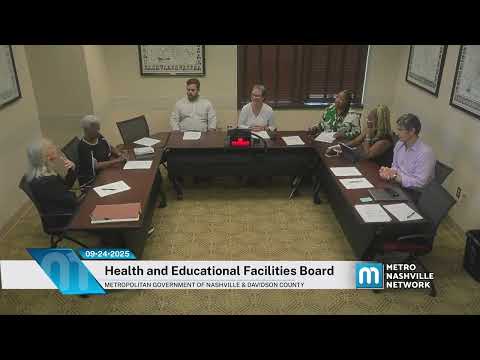
The Health and Educational Facilities Board on Wednesday granted final approval for TWG Parkwoodville LP to issue up to $26,000,000 in multifamily housing revenue bonds to finance renovations at Parkwood Villas.
Marissa Knatzer, who identified herself as a representative of TWG Development, told the board the renovation project received 4 percent low‑income housing tax credits and covers 160 units originally built in 1975. "All units at 50–60 percent AMI," Knatzer said, and she said the developer hoped to begin construction in "a month or two." She described upgrades including replacement of appliances with Energy Star models, like‑for‑like interior replacements, accessibility and ADA code compliance, a recently replaced roof and life‑safety repairs.
Board members asked about turnover, vacancy and relocation during rehabilitation. Knatzer said occupancy stood at about 82 percent and that the developer expects some turnover while rehabbing the site. "We have to have 15 to 20-ish vacant units that we rehab first, and then residents can live in those," she said. She added the sponsor handles moving costs for residents and hires movers to reduce disruption. The developer estimated unit turn time at about five to seven days.
No members of the public spoke at the project's public hearing. A board member moved to approve final issuance; the motion was seconded and approved by voice vote.
The board did not provide a line‑by‑line roll call in the meeting transcript. The transcript records the not‑to‑exceed figure of $26,000,000 and the developer's description of planned improvements and tenant relocation procedures. The developer did not provide a construction start date beyond "a month or two," nor did the board record any additional conditions attached to the approval during the meeting.
The board followed the vote with brief discussion of member onboarding and other administrative items.