Get Full Government Meeting Transcripts, Videos, & Alerts Forever!
Get email alerts on the City Budget topic
No spam. Unsubscribe anytime.
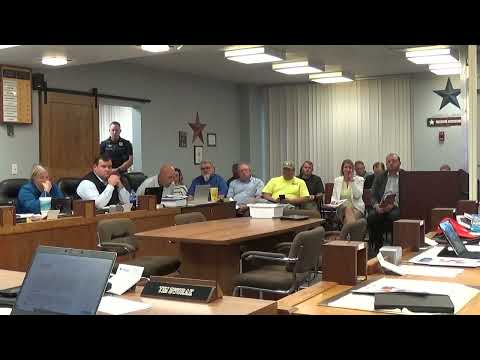
Seward council holds public hearings on proposed FY2026 budget; levy trimmed slightly
Summary
City staff presented the proposed fiscal year 2026 budget, reporting a small cut to the proposed property tax levy and outlining plans for major capital projects and utility rate changes. No members of the public spoke during the hearings; the council adjourned without adopting the budget.
City of Seward staff presented the proposed fiscal year 2026 budget at a pair of public hearings during a city council meeting and reported a reduction in the proposed property tax levy from 0.299 to 0.297803.
The hearings summarized revenue and expense assumptions, capital projects and program priorities and left the budget for formal amendment or adoption at a later meeting. No members of the public spoke during either public comment period.
Greg, speaking for city staff, outlined key budget items and assumptions and the process used to prepare the proposal. He said health insurance premiums "had approximately a 5.2% increase across the board" and that the city proposed a 3% cost-of-living adjustment for wages. Greg also said the city recorded an "approximate 10% increase in our insurance premiums" when combining liability, workers’ compensation, auto and commercial property coverages.
The proposed levy change came after department heads identified modest savings, including postponing a golf-course verticut mower purchase — described in the budget memo as a roughly $15,000 piece of equipment — which staff said allowed the levy request to be reduced slightly. "So we reduced the levy ask from 0.299 to 0.297803," Greg said during his presentation.
Under the proposal, the city’s property tax request for fiscal year 2026 is $2,261,794, up from $2,155,604 the prior fiscal year, a difference of $106,190. Staff said the levy reduction lowered the tax ask by about $9,000 compared with the earlier proposal.
Staff highlighted several program- and capital-related items in the presentation: an expected $780,000 in sales-tax revenue earmarked to begin debt payments on the recently completed wellness center; continued work on utility rate adjustments (staff proposed a 3% increase in electric, water and wastewater rates); and a multiyear wastewater treatment-plant construction project supported by State Revolving Fund (SRF) financing for a facility described in the presentation as a $51,000,000 project.
Other specifics noted by staff included use of a $100,000 sinking-fund draw from the fire department to cover equipment, planned replacement work for an ambulance chassis and medical equipment, a decision to defer a greens mower purchase, and a change to recycling operations after a recycling employee’s final day on Oct. 31. Staff also said the city would monitor a school district bond process for potential shared field improvements such as Legion Field.
Greg told the council the budget proposal does not create a general-fund deficit aside from the planned sinking-fund draw and that cash reserves would meet the city’s internal policy of six months of operations and maintenance plus debt service.
During the hearing staff noted a county request — required by state statute — that local budgets identify the portion of property tax that supports emergency services; staff said Seward’s public-safety budgets (fire, EMS and police) exceed the property-tax ask when other revenue sources are counted.
Councilmembers asked no substantive public questions during the hearings and no members of the public signed up to speak during either comment period. The council did not adopt the budget at that meeting; staff said the council retains the option to adopt the budget at a subsequent meeting scheduled for next Tuesday to consider amendments and final adoption. The meeting concluded with a motion to adjourn that passed unanimously, 7-0.
What happened next: Because the council did not adopt the budget during the hearings, the proposal remains a proposed budget. Councilmembers will have opportunity to propose amendments and to vote on final adoption at the follow-up meeting identified by staff.