Get Full Government Meeting Transcripts, Videos, & Alerts Forever!
Get email alerts on the Zoning Board Of Appeals Training topic
No spam. Unsubscribe anytime.
East Grand Rapids Zoning Board of Appeals holds training on variance standards, procedures and conflict rules
Summary
The Zoning Board of Appeals reviewed state law, variance standards and board procedures in a training session; staff and members discussed fees, conditional rezoning and recordkeeping. Members were reminded to base decisions on ordinance standards, avoid ex parte contacts and document reasons for votes.
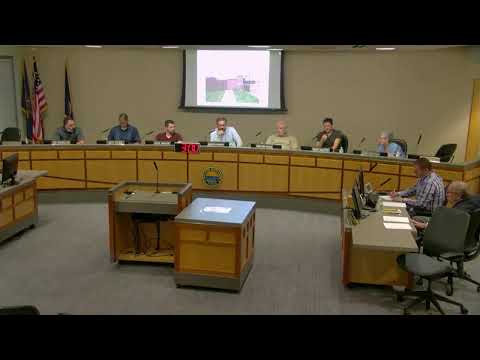
The Zoning Board of Appeals of East Grand Rapids held a training session during its regular meeting to review variance standards, appeals procedures and board responsibilities under Michigan law.
The session focused on when and how the board should grant relief from zoning rules, the difference between dimensional (non‑use) and use variances, and limits on appeals of planning commission and administrative decisions. The presenter emphasized that "the Zoning Board of Appeals' primary function is to uphold the zoning ordinance requirements except in unusual, rare, exceptional circumstances related to conditions of the property," and that variances are intended to address property‑specific physical conditions rather than owners' financial preferences or convenience (Presenter, instructor).
Why it matters: ZBA decisions create legal records that courts review on appeal, and the board's consistent use of ordinance standards limits exposure and preserves the planning commission and city commission's policymaking roles. The board was told to document findings against each statutory standard and to treat each variance request on its own merits.
Key points from the training
- Legal framework and scope: The presenter reviewed the Michigan Zoning Enabling Act (2006) and the Planning Act (2008) as the sources of the board's authority and clarified that appeals of planned unit developments and special land uses go to the courts when the local ordinance expressly prohibits ZBA review. The presenter also discussed the Paragon Properties v. City of Novi Supreme Court decision as a controlling case that some attorneys find problematic but must be followed.
- Variance standards: For dimensional (non‑use) variances the board must find "practical difficulty," including unique physical conditions of the property that are not self‑created; for use variances the legal standard is "unnecessary hardship," meaning the property cannot be used for any permitted purpose as zoned. The presenter said: "If all the standards are met, you must approve the variance. If any standard is not met, the variance must be denied." (Presenter).
- Fees and access to appeal/interpretation: Staff described how application fees are reviewed annually and tied to estimated staff time; members discussed whether charging fees for interpretations could raise constitutional concerns. Jay (staff member) said the city reviews average staff time and updates fees accordingly and that staff often tries to answer preliminary questions at no charge to reduce unnecessary hearings.
- Conditional rezoning as an alternative: The group examined how conditional rezoning can be used instead of use variances to provide tightly drawn, lasting limits on future uses. The presenter noted that conditional rezoning conditions "run with the land," while variances, once granted, also run with the land under state case law.
- Meeting and decision procedures: The board reviewed quorum and voting rules (a majority of the full membership is required to approve interpretations, appeals and dimensional variances), rules on site visits (avoid ex parte lobbying; document factual observations), how to structure motions and conditions, and the importance of producing a clear written record citing ordinance standards for each finding.
- Conflict of interest and public confidence: The presenter stressed that board members should promptly disclose and recuse when a family or financial relationship creates a perception of bias and, if recused, ideally leave the room so that the public clearly sees the abstention.
Examples and guidance discussed
- Practical examples used by the presenter included: lot topography that precludes building within the normal envelope; accessory buildings and garage sizes; and past local examples where conditional rezoning replaced an earlier use variance.
- The presenter said the rule of thumb used in Michigan practice is that most variance requests (roughly eight of ten) are properly denied if measured against the standards, and noted that since 2022 East Grand Rapids' board heard 16 variance applications and approved three (approximately 19%), which the presenter cited as consistent with a standards‑based approach.
Administrative matters and meeting actions
- The meeting included routine roll call and approval of the previous meeting minutes. A motion to approve the minutes was made and seconded; the chair called the vote and the minutes were approved. (Motion details recorded in meeting actions.)
- The board opened the public comment period, determined no members of the public were present, closed public comment and proceeded with the training.
What was not decided
- The session was a training and did not include substantive votes on specific variance applications. No new ordinances, rezonings or variances were approved or denied in this session beyond the procedural motions noted above.
Looking ahead
- Staff and board members discussed periodic review of fees, the value of providing standardized worksheets documenting how each variance standard was applied, and the planning commission’s role in recommending ordinance changes if the board encounters frequent similar variance requests.
Ending note: Members praised staff for prepared materials and asked that deliberations continue to explicitly tie individual votes to the ordinance standards so the record clearly supports any decision should it be appealed.