Get Full Government Meeting Transcripts, Videos, & Alerts Forever!
Get email alerts on the Annexation Sewer Hookup topic
No spam. Unsubscribe anytime.
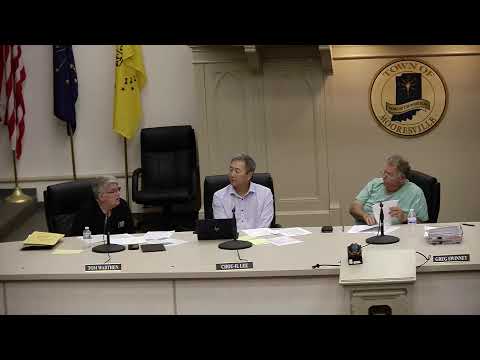
Mooresville council authorizes legal work to explore annexation tied to sewer hook-up on East Landersdale Road
Summary
The council authorized legal counsel to work with resident Jonathan Young on a voluntary annexation process that would allow a sewer connection to 5020 East Landersdale Road, conditioned on a formal petition and a commitment not to withdraw the petition once the town begins work.
Resident Jonathan Young asked the Mooresville Town Council on Sept. 16 for permission to connect a house at 5020 East Landersdale Road to the town sanitary sewer after his septic system failed.
Jonathan Young told the council the house is currently on septic and that a riser exists about 86 feet west of a nearby manhole. “The septic has failed at this time,” Young said. He said he would “entertain” annexation but wanted to understand what the town would provide and what he would give up in taxes and services.
Council members said past practice required annexation before authorizing hookups outside corporate limits, especially after the county removed the town’s two-mile buffer zone and zoning oversight for nearby unincorporated parcels. Town leaders explained that annexation would bring police protection, fire service, sanitation, and the right to hook to the town’s sanitary sewer, but it would also increase Young’s tax rate by an amount the council estimated at roughly $0.17–$0.18 per $100 of assessed value.
Council members and counsel described the relevant procedure as “super voluntary annexation,” which requires a petition, a public notice and hearing, and ultimately an annexation ordinance if the council approves. Legal counsel described a mechanism (an agreement recorded in public record) to require that the petition not be withdrawn if the town extends sewer in reliance on the commitment; enforcement could require court action if a petitioner later tried to withdraw.
Council and Young agreed to let legal counsel prepare documents to start the process. The council voted to authorize legal counsel to work with Young to draft a super voluntary annexation petition and related commitments; members said they would consider formally approving the petition at a subsequent meeting if Young confirmed he wanted to proceed. The motion to authorize legal counsel to work with Young passed after a motion and second and an affirmative vote.
Town officials said work on a formal petition and a legal agreement could be prepared in time for the council’s next meeting and that, once the petition is filed and the council acted to authorize construction, the town would allow the sewer connection to proceed. Legal counsel cautioned that enforcing a withdrawn petition would be a civil action and could require court involvement.
No annexation ordinance was adopted at the Sept. 16 meeting; the council’s action was limited to authorizing counsel to draft and coordinate a super voluntary annexation petition and related paperwork.