Get Full Government Meeting Transcripts, Videos, & Alerts Forever!
Get email alerts on the Russia Georgia Security topic
No spam. Unsubscribe anytime.
U.S. hearing: Georgia a "test case," lawmakers and Georgian official warn, urge continued Western support
Summary
At a U.S. Helsinki Commission hearing, a U.S. congressman and a Georgian official said Russia used the 2008 war as a test of aggression and is now pursuing nonmilitary means such as rigged elections and proxy governments; speakers urged sustained Western backing for Georgia and Ukraine.
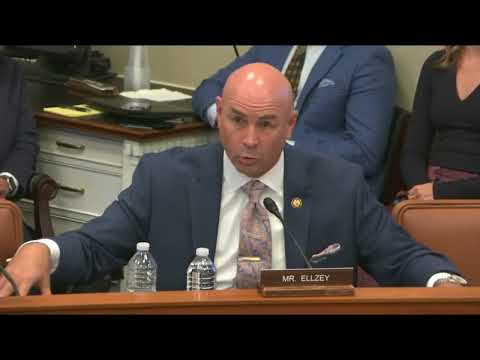
At a hearing of the Commission on Security and Cooperation in Europe (U.S. Helsinki Commission) on Oct. 25, 2025, Congressman Jake Yelsey and a visiting Georgian official warned that Russia views Georgia as a test case for broader coercive tactics and urged continued Western support for Georgia and Ukraine.
“Watch out for yourself because we know who the enemy is. Evil can never be eradicated. It can only be suppressed,” Congressman Jake Yelsey said, adding that Russia’s actions after the 2008 war signaled a pattern of aggression that later appeared in Crimea and the 2022 invasion of Ukraine.
The Georgian official who spoke described a shift in Moscow’s methods after military setbacks in Ukraine. “The military aggression on Ukraine has not worked in the way that Mr. Putin was expecting,” the official said, adding that, after failing to achieve rapid territorial gains, Russia appears to be pursuing alternatives such as election interference, propaganda and proxy governments.
Why it matters: Speakers at the hearing framed the 2008 conflict in Georgia as a turning point used by Russian leadership to test new military approaches and, later, to revise strategy. They warned that if nonmilitary tactics succeed in Georgia, those methods could be exported to other neighboring states.
Speakers repeatedly referenced three elements they said threaten democratic outcomes in Georgia: restricted diaspora voting, a constitutional court perceived as controlled by one party, and efforts by political actors described as aligned with Russia (identified in the hearing as “Georgian Dream”). The Georgian official said the diaspora of roughly 1,000,000 people outside Georgia was effectively excluded from voting in a recent contest—“just 17,000 persons were allowed to vote,” the official said—while the constitutional court lacked independence, according to the same speaker.
Speakers linked those concerns to recent history: the Rose Revolution and the August 2008 conflict with Russia, and later actions in Crimea and 2022. The U.S. representative warned that small nations can be “gobbled up” if the free world does not respond, and he invoked historical comparisons to Europe in the late 1930s and early 1940s to argue for vigilance.
The hearing included no formal votes or policy decisions. Discussion focused on testimony and calls for continued political, diplomatic and material support for Georgia and for Ukraine’s defense. Speakers emphasized that the situation requires attention to both military and nonmilitary tactics, and urged Western governments to monitor and counter alleged election rigging, propaganda campaigns and proxy actors.
The session concluded with repeated appeals from the U.S. lawmaker and the Georgian official for allies to sustain pressure on Moscow and to support democratic institutions in Georgia and neighboring countries.