Get Full Government Meeting Transcripts, Videos, & Alerts Forever!
Get email alerts on the School Budgeting topic
No spam. Unsubscribe anytime.
Board adopts 2025–26 working budget after finance update; contingency trimmed to 6%
Summary
Clark County Board approved the district’s 2025–26 working budget and related payments after a finance presentation showing a $329,000 net surplus when beginning-balance items are excluded and a contingency set at 6%.
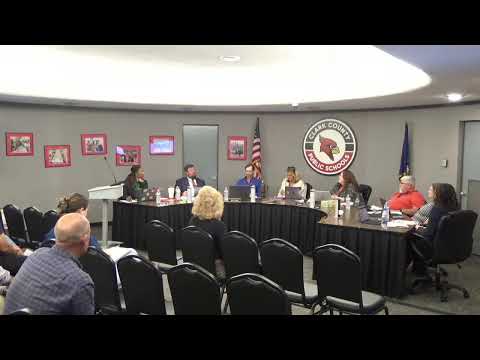
The Clark County Board of Education voted 5-0 to approve the district’s 2025–26 working budget and to pay salaries and accounts payable as presented.
Finance Director Miss Ellis told the board the working budget records projected receipts of just over $50 million and expenditures of about $55.1 million, and explained that when certain beginning-balance encumbrances are removed the operating position shows an approximate $329,000 surplus. Ellis said the district’s contingency was set at 3.9 (6 percent) after rolling encumbrances and planned expenditures into the working budget.
Key factors cited by staff included a large one-time insurance cost increase (about $320,000) and an earlier, large Chromebook purchase, both of which reduced the beginning balance carried into the working budget. Ellis also said property-value changes shifted state SEEK funding and that some capital funds increased to partially offset other impacts. The finance presentation noted encumbered bus purchases and grant accounting entries that affect fund-level balances.
Board action and votes
- Motion to authorize payment of salaries and accounts payable — motion carried 5-0.
- Motion to approve the 2025–26 working budget and submit it to the state (deadline Sept. 30) — motion by Board Member Hall; second by Board Member Dorsey; outcome: approved 5-0.
Why it matters: The working budget sets revenue and expenditure expectations for the fiscal year and is the document the district will file with the state by the statutory deadline. Staff emphasized the district’s contingency and the need to monitor encumbrances, grant receipts and tax collections (franchise and motor vehicle collections were noted as variable).
Details from the finance presentation
- Revenues and contingency: The district’s receipts projection reflected the tax rate adopted last month; franchise receipts and motor-vehicle collections were described as volatile but currently tracking ahead of last year (franchise about 16 percent, motor-vehicle about 13 percent of expected collections at the time of the report).
- Expenditures: Payroll increases previously approved were included. Employee benefits decreased modestly due to a lower KPPA retirement rate for classified staff; however, insurance expense increased and some program costs formerly paid with ESSER funds moved back onto the general fund.
- Fund-level context: The budget packet shows 10 district funds. Grant budgets are established only when awarded; the working budget reflected newly established grants totaling roughly $6.9 million for the physical-year grants identified in the packet.
Ending: Board members praised staff for clear presentation and approved the working budget and payments; staff will continue to monitor collections, encumbrances and grant awards through the fiscal year.