Get Full Government Meeting Transcripts, Videos, & Alerts Forever!
Get email alerts on the Judicial topic
No spam. Unsubscribe anytime.
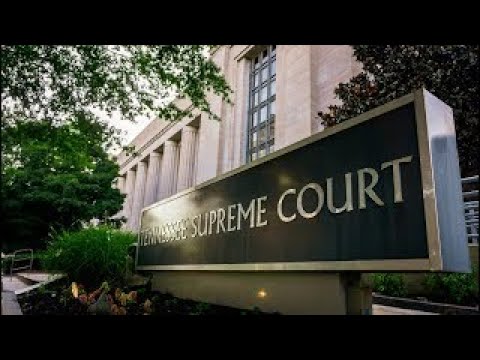
Tennessee Supreme Court hears challenge to Kaufman rule in seat-belt-extender/booster-seat case
Summary
In consolidated appeals arising from a child’s injury, attorneys disputed whether the court’s Kaufman ruling bars duty-to-warn claims where harm allegedly resulted from the interaction of a Ford seat-belt extender and a Dorel booster seat used in a Nissan Juke.
The Tennessee Supreme Court heard oral argument over whether its decision in Kaufman bars product-liability failure-to-warn claims when harm arises from two manufacturers’ products used together — here, a Ford seat-belt extender, a Dorel booster seat and use in a Nissan Juke.
Plaintiff counsel argued the Kaufman rule does not control because the defendants here manufactured the products the plaintiff alleges were defective and because the suit challenges warnings and instructions that accompanied those products. "Here, Ford certainly made the seat belt extender that harmed Ethan Woodruff, and Dorel certainly made the booster seat that harmed Ethan Woodruff," counsel for the Woodruffs told the court, adding that statutes and tests such as the consumer-expectation and prudent-manufacturing tests remain available under the Tennessee Product Liability Act (TPLA).
Counsel for Ford urged the court to apply Kaufman, saying the decision sets a bright-line rule that a manufacturer's duty under the TPLA extends to its own product "at the time it leaves the manufacturer's control" and does not require manufacturers to warn about every potential risk that might materialize later if their product is combined with another manufacturer's product. "If a manufacturer has no duty to warn when it specifically intends a product combination, then certainly a manufacturer should have no duty to warn when it does not intend that combination," counsel for Ford said.
Dorel's lawyer told the court that the difference between an affirmative endorsement or warranty about another product and giving general usage advice matters under the TPLA. He urged the court to affirm dismissal of Dorel because, he said, the record lacks evidence that the booster-seat instructions were read or that Dorel's guidance was followed. "There is simply no evidence that he ever read anything," counsel for Dorel said, arguing causation questions about reading or following instructions are jury issues only when the record contains sufficient evidence.
Argumenters debated statutory language and precedent. Plaintiff counsel emphasized TPLA section 105(b) language about assessing the state of scientific and technological knowledge at the time a product entered the market, and cited prior Tennessee decisions (including Mills v. Ford Motor Company) as demonstrating that a manufacturer's knowledge can define what warnings are adequate. Defense counsel reiterated that Kaufman interpreted the TPLA to limit duty inquiries to the manufacturer's own product as sold.
The parties also disputed factual record points the lower courts relied on: plaintiff's counsel said the Dorel manual and an extender warning tag were recovered with the vehicle and argued those facts support a jury inference that the booster-seat manual was read; Dorel's counsel and Ford contested that the Nissan manual was not found and argued there is insufficient evidence that the instructions were read or followed.
Justices questioned both sides about how Kaufman should be applied (or limited) and whether foreseeability and causation are distinct inquiries from duty under the TPLA. Multiple justices pressed hypothetical scenarios about foreseeability and the scope of warnings manufacturers could be required to provide, and asked whether the case should be resolved as a legal threshold (duty) matter or left to trial to decide factual causation and adequacy of warnings.
No decision was announced at the hearing. The court recessed after argument and took the consolidated appeals under advisement.