Get Full Government Meeting Transcripts, Videos, & Alerts Forever!
Get email alerts on the Emergency Dispatch Workforce topic
No spam. Unsubscribe anytime.
Susanville dispatch supervisor recounts 2008 domestic assault and describes demands of emergency dispatch work
Summary
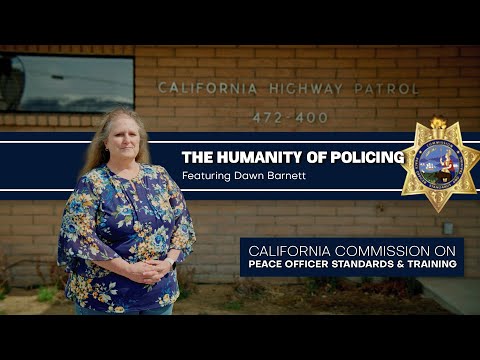
Dawn Barnett, a public safety dispatch supervisor, told a public meeting she survived a March 3, 2008, domestic assault in which her mother was badly beaten. Barnett described the technical and emotional challenges dispatchers face, including multitasking, cell-trace procedures and trauma from critical incidents.
Dawn Barnett, a public safety dispatch supervisor, told meeting attendees she survived a domestic assault on March 3, 2008, in which her mother was badly beaten and Barnett feared for their lives. Barnett described how that experience led her into emergency communications work and informed her approach to dispatcher training and response.
Barnett said the arresting officers arrived after a neighbor or friend called 911; she recounted that during the incident an assailant blocked exits and held what she described as a stiletto-type blade. She said her daughter returned home early that night and that Barnett sought help by texting a friend to call police. Barnett said she later contacted other agencies while working as a new dispatcher to locate and help a person whose phone registered outside the local area, using a cell-trace and interagency calls to identify the victim and coordinate a response.
The testimony put a spotlight on the operational and emotional demands placed on dispatchers. Barnett described the work as requiring the ability to multitask — answering a live call while creating a computer-aided dispatch log and asking probing questions — and said that new dispatchers can be overwhelmed balancing speed with the need for critical information. She described changes from paper records to fully computerized systems and noted that legal and procedural changes force dispatch centers to adapt over time.
Barnett recounted a successful instance early in her dispatching career: "I had won the lottery. I had done what I could to find her a successful conclusion," she said, describing how a cross-jurisdictional query led to officers locating and rescuing a domestic-violence victim. She also described long-term physical effects from the assault she survived: "The result of the injury to my left arm was that I now carry a plate with 7 screws," she said.
In testimony Barnett emphasized the emotional burden on dispatchers who handle traumatic calls and sometimes never learn outcomes for callers. She described how dispatchers can internalize responsibility for outcomes and how hard it can be to let go after critical incidents. Barnett said these stresses make training, good supervision and peer support important elements of an effective communications center.
Barnett did not offer specific policy proposals or ask for particular funding at the hearing. She described concrete operational practices she used on calls — obtaining location data from phone records, contacting other jurisdictions when necessary and relaying known risks to responding officers — and urged attention to dispatcher training and mental-health supports as part of maintaining public safety.
Barnett identified herself at the close of her remarks: "I'm Dawn Barnett, and I'm a public safety dispatcher. And now I'm a public safety dispatch supervisor." She spoke about dispatch work both through the lens of her personal experience as a survivor of domestic violence and through examples from her career in emergency communications.