Get Full Government Meeting Transcripts, Videos, & Alerts Forever!
Get email alerts on the Supportive Housing topic
No spam. Unsubscribe anytime.
Center City Housing updates commissioners on Park Place supportive housing; program serves up to 60 residents
Summary
Center City Housing staff described Park Place, a 60‑unit facility completed in 2017 with multiple funding sources, noting a mix of 20 HRA units and 40 housing‑support units for residents with behavioral‑health or substance‑use challenges; staff said occupancy fluctuates and case managers work with coordinated entry to prioritize placements.
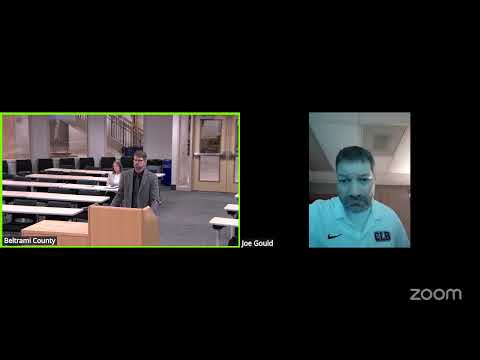
Laurie Riley of Center City Housing and Miranda Wood, site director for Park Place, updated the Beltrami County Board on Park Place operations and funding.
Riley said Center City partnered with local agencies and secured capital funding from Minnesota Housing Finance Agency, tax credits and a Federal Home Loan program to build the project, which opened in 2017 and cost about $10 million to develop. The building contains two program components: a 20‑unit HRA side where residents pay 30% of income and a 40‑unit housing‑support side intended for people who face barriers to housing because of substance use, behavioral health or chronic homelessness.
On the housing‑support side, staff said tenants who have income pay according to program rules; residents without income do not pay rent because they have no income. Staff noted the program provides a stipend ($128 referenced as the state‑set amount for housing support), three meals a day in a dining hall, hygiene and cleaning supplies, transportation and on‑site services including a full‑time nurse supported by Sanford Medical and a cultural‑support worker.
Riley said staffing at Park Place includes roughly 20–25 employees: a site director, case managers, nurse, maintenance and support staff. The program employs case managers who work with coordinated entry and HUD funding to prioritize individuals for placement. Riley said occupancy on the HRA side generally remains near 100%; at the time of the update the housing‑support side had about 10 openings and staff were using coordinated entry lists to fill those units.
Commissioners asked about turnover and outcomes. Riley said many residents have long histories of homelessness and treatment and that some residents transition to more independent housing over time. “Right now, about 35 percent have been housed over 6 years,” Riley said, and others have moved to the HRA side or to outside housing when they are able.
Commissioner Gould, participating remotely, said she is generally supportive and noted prior volunteer experience. The board did not record any formal action on Park Place during the work session.