Get Full Government Meeting Transcripts, Videos, & Alerts Forever!
Get email alerts on the Local Budget And Finance topic
No spam. Unsubscribe anytime.
Wakulla County adopts FY 2025–26 budget and 7.9‑mill millage after public hearing; commissioners debate COLA and cuts
Summary
After a second required public hearing, the Wakulla County Board of County Commissioners voted to set a countywide millage at 7.9 mills and adopt the FY 2025–26 budget amid debate over a proposed cost‑of‑living adjustment, overtime, and capital spending.
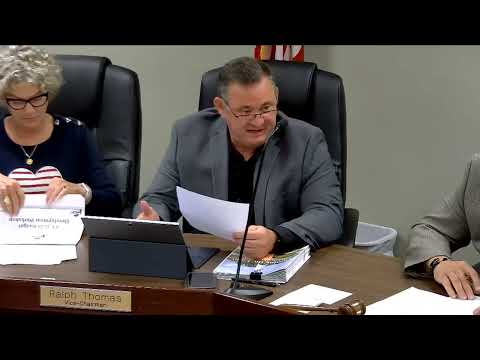
Wakulla County commissioners on [date not specified] held the required second public hearing on the fiscal year 2025–26 budget and voted to set the countywide millage rate at 7.9 mills and adopt the budget as presented by the county administrator.
County Administrator read the final millage into the public record as “7.9 mills, which is 5.39% more than the … rollback millage rate of 7.4963 mills.” The board voted separately on the millage and the budget, approving the millage and then the budget in two separate motions.
The hearing included extended discussion among commissioners and staff about potential ways to reduce the tax rate, including suspending the proposed cost‑of‑living adjustment (COLA), cutting overtime and elective training budgets, and trimming new capital spending. Commissioners and staff reviewed an exercise prepared for the board that modeled several scenarios: the county’s general fund revenue was noted in the discussion as projected to increase by about $2.3 million (about 11%); the adjusted rollback rate cited was 7.4963 mills; and staff said excluding public safety and grant‑funded items was part of the exercise.
Board members discussed the tradeoffs of removing the 3% COLA, which staff estimated would save roughly $387,000, and the impact that would have on employees. Commissioners also examined overtime and travel/training categories; staff said overtime is budgeted across multiple departments (including fleet, roads, parks/facilities and building/planning) and that the budgeted overtime is based on historical actuals, which included storm response this year. Staff emphasized that the exercise excluded public safety for purposes of the scenario calculations.
Members asked about capital spending funding sources. Staff said the capital total discussed in the exercise was largely outside grants and primarily tied to dedicated funds such as the 1¢ sales tax, sewer access fees and road fund allocations; there was no comprehensive capital spending plan in the materials presented and staff said that plan typically comes to the board in November or December.
After deliberation the board approved the millage and the budget. On the millage motion the roll call recorded the measure as approved (vote tally recorded by the clerk as 4–1). The subsequent motion to adopt the FY 2025–26 budget as presented—amended through the agenda process—also passed (vote recorded 4–1).
The board chair and multiple commissioners repeatedly framed the discussion as balancing fiscal responsibility with the county’s commitments to long‑term employees, pointing out prior personnel and pay adjustments made to retain staff. Staff and commissioners said the county has secured significant infrastructure funding in recent years, a factor cited by some members arguing against across‑the‑board cuts that would affect employee compensation.
Moving forward, staff said they will publish the adopted budget documents and continue work on a capital spending plan later in the year. The board heard no additional public speakers during the budget hearing after the initial public comment period.