Get Full Government Meeting Transcripts, Videos, & Alerts Forever!
Get email alerts on the Homelessness topic
No spam. Unsubscribe anytime.
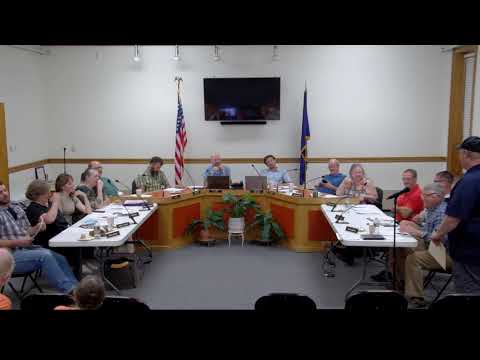
Boards direct staff to draft overnight-camping ordinance after concerns about encampments and shelter conditions
Summary
Planning board requested a ban on overnight camping in public spaces; selectmen discussed enforcement limits and the town's relationship with a local shelter and state authorities.
The Skowhegan planning board asked the selectmen Wednesday to pursue an ordinance prohibiting overnight camping on public property and to review further measures aimed at reducing visible encampments in town.
Why it matters: Board members and residents described recurring encampments in parks, boat launches and riverfront spaces and said the public spaces have accumulated trash, needles and human waste in some locations. Officials said the visible conditions are harming residents’ sense of safety and undermining the town’s presentation to visitors and potential investors.
Board discussion: Planning board members said signage and existing park closing hours provide a partial enforcement tool, but police warnings alone often fail to prevent people from returning. “There’s just not enough teeth for them to say, ‘Okay, you’re out of here,’” a planning board member said, noting police tend to issue warnings that do not produce lasting relocation.
Selectmen and staff noted constitutional and legal limits on vagrancy laws; one member said vagrancy ordinances have been struck down in some contexts, and that any ordinance would need legal review. Several participants urged a phased approach: adopt an overnight-camping prohibition for public spaces first, then study additional measures including potential “vagrancy-style” language, cleanup protocols and coordination with county and state services.
Shelter issues and state involvement: Public commenters and selectmen raised specific concerns about the operation and occupancy of a local shelter. Participants said prior attempts by state inspectors and the fire marshal drew mixed outcomes; a town official recalled a prior period when the governor’s office advised against state enforcement action at the facility. Board members asked the selectmen to meet with shelter operators to review occupancy, health conditions and wraparound services, and to determine what, if any, enforcement or support the town can lawfully provide.
Next steps: Staff will draft an overnight-camping ordinance modelled on examples from peer towns, and the selectmen will meet with the shelter operators to review occupancy, health and safety. Board members emphasized that drafting the ordinance is a first step and not a solution to housing needs; several speakers urged concurrent work on services and cleanup plans.