Get Full Government Meeting Transcripts, Videos, & Alerts Forever!
Get email alerts on the Parking topic
No spam. Unsubscribe anytime.
Skowhegan boards form subcommittee to study downtown parking and possible ordinance changes
Summary
Planning board and selectmen agreed to form a four-person subcommittee to research revisions to site plan parking requirements, including expanding permitted parking distance, timed-use rules and enforcement options.
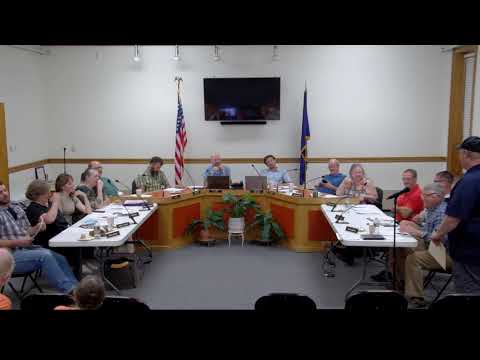
Skowhegan officials agreed Wednesday to form a joint planning/selectmen subcommittee to study downtown parking requirements and potential changes to the town’s site plan ordinance.
The planning board and selectmen heard that the current ordinance’s parking requirements — including a 1.5-space-per-unit rule for multifamily housing — can block redevelopment of upper-floor apartments and similar projects when sites lack adjacent space for required spots. “The main parking issue for this town is really the downtown zone,” a planning board member said during the discussion.
Why it matters: Board members said restrictive parking rules have delayed or complicated projects in the downtown core, where narrow lots and historic building footprints limit on-site parking. Several members argued the town risks leaving buildings underused because developers cannot meet the ordinance’s parking formulas.
What the subcommittee will study: Participants said the group should consider models used by neighboring towns; whether to allow greater distances between buildings and required parking; time-of-use allocations (day vs. night parking); expanded use of municipal lots; permit or fee-in-lieu systems; and low-impact paving alternatives such as permeable surfaces.
Select board members also emphasized enforcement and winter maintenance as constraints: if residents of new downtown housing park in municipal lots overnight, the town must keep plow operations and snow removal workable. Staff noted some municipal lots are long underused now and could be included in staged solutions, while others suggested shuttle or remote-parking options tied to events.
Action taken: Volunteers came forward to form the subcommittee. The planning board will assign two members and the select board will designate two members to work with staff and the contracted town planner; the subcommittee will draft options and present them to each board. Chair remarks indicated the committee should prioritize the downtown ordinance and aim to return proposed language for board review within the coming year.
Next steps: Staff and the town planner will gather ordinances and examples from peer towns, prepare parking-count maps and compile enforcement options for the subcommittee. The group will return with draft language for the planning board and selectmen to review before any move to place an ordinance change on a town meeting warrant.