Get Full Government Meeting Transcripts, Videos, & Alerts Forever!
Get email alerts on the Rate Case Net Metering topic
No spam. Unsubscribe anytime.
PUCN accepts phase‑1 stipulation in NV Energy rate case; public speakers urge rejection of daily demand charge and 15‑minute netting
Summary
The Public Utilities Commission of Nevada on the record accepted a phase‑1 stipulation in NV Energy’s general rate case and granted the company’s applications as modified by the commission’s draft order.
The Public Utilities Commission of Nevada on the record accepted a phase‑1 stipulation in NV Energy’s general rate case and granted the company’s applications as modified by the commission’s draft order. The dockets identified in the proceeding were presented as the company’s applications to adjust annual revenue requirements and to implement a revised net‑metering schedule.
The commission’s action came after more than a dozen public commenters in Carson City and Las Vegas criticized portions of the draft order, particularly a proposed daily demand charge for residential customers and a shift from monthly netting to a 15‑minute interval for net metering. Lina Tanner, representing the Clark County Department of Environment and Sustainability, told the commission that “the proposal clearly contemplates monthly netting of net excess electricity” and urged the body to uphold monthly netting and consumer equity. Janet Carter, vice chair of the Sierra Club Toiyabe Chapter, said the 15‑minute increment would be “confusing to the public” and could increase bills for people who cannot shift usage, such as outdoor workers. Christian Salmon, a ratepayer and commenter, said the proposed “daily maximum kilowatt charge penalizes brief and non‑coincident residential spikes” and urged a shadow‑billing pilot before implementation.
Why it matters: Commenters said the changes would reduce compensation for rooftop solar customers, erode predictability for solar investments and disproportionately affect working families, people with medical needs, and small businesses. Several speakers tied their concerns to state policy and prior legislation, noting Assembly Bill 405 (2017) as foundational to Nevada’s net‑metering framework and urging the commission to avoid measures that would discourage distributed generation.
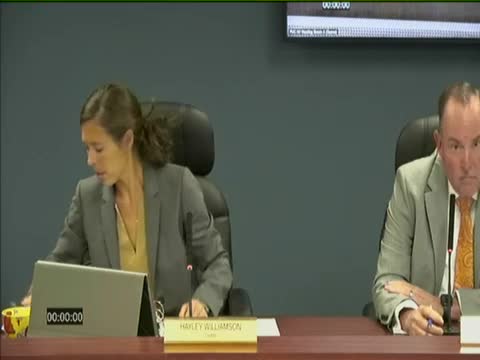
Commission discussion and vote Commissioner Cordova presented the docket and, after noting a correction to include officers’ LTIP in the list of compensation items excluded from rates, moved that the commission accept the phase‑1 stipulation and grant the applications as modified by the draft order. Commissioner Brown seconded. The commission recorded the motion and the chair called the vote; commissioners voted in favor and the motion carried.
Public concerns recorded in the hearing - Consumer advocates and environmental organizations told the commission the daily demand charge would shift fixed costs to residential customers and penalize solar adopters. Lina Tanner (Clark County Department of Environment and Sustainability) said the shift to 15‑minute netting “effectively eliminate[s] any true netting of energy,” a change she said would undermine state policy supporting distributed renewables. Janet Carter (Sierra Club Toiyabe Chapter) warned that higher bills could drive people to forgo needed air conditioning in extreme heat. Multiple speakers including Isaiah Gallegos and Robert Garcia framed the proposal as an added burden on working families and small businesses. - Several commenters asked the commission to pursue alternatives such as voluntary time‑of‑use rates, to run pilot programs (including shadow billing), and to publish validation of interval metering before adoption.
What the commission approved The commission authorized the phase‑1 stipulation and granted the applications in the form presented in the draft order on the record, with the stated correction adding LTIP to excluded officer compensation. The record does not include details of any follow‑up implementation timetable for the specific rate design elements challenged by commenters; commissioners also discussed holding additional consumer sessions in Clark County.
Ending The order and the motion resolving the phase‑1 stipulation were adopted on the record. Several members of the public said they would submit written comments and supporting materials to the docket for the commission’s later review.