Get Full Government Meeting Transcripts, Videos, & Alerts Forever!
Get email alerts on the Education Workforce Coordination topic
No spam. Unsubscribe anytime.
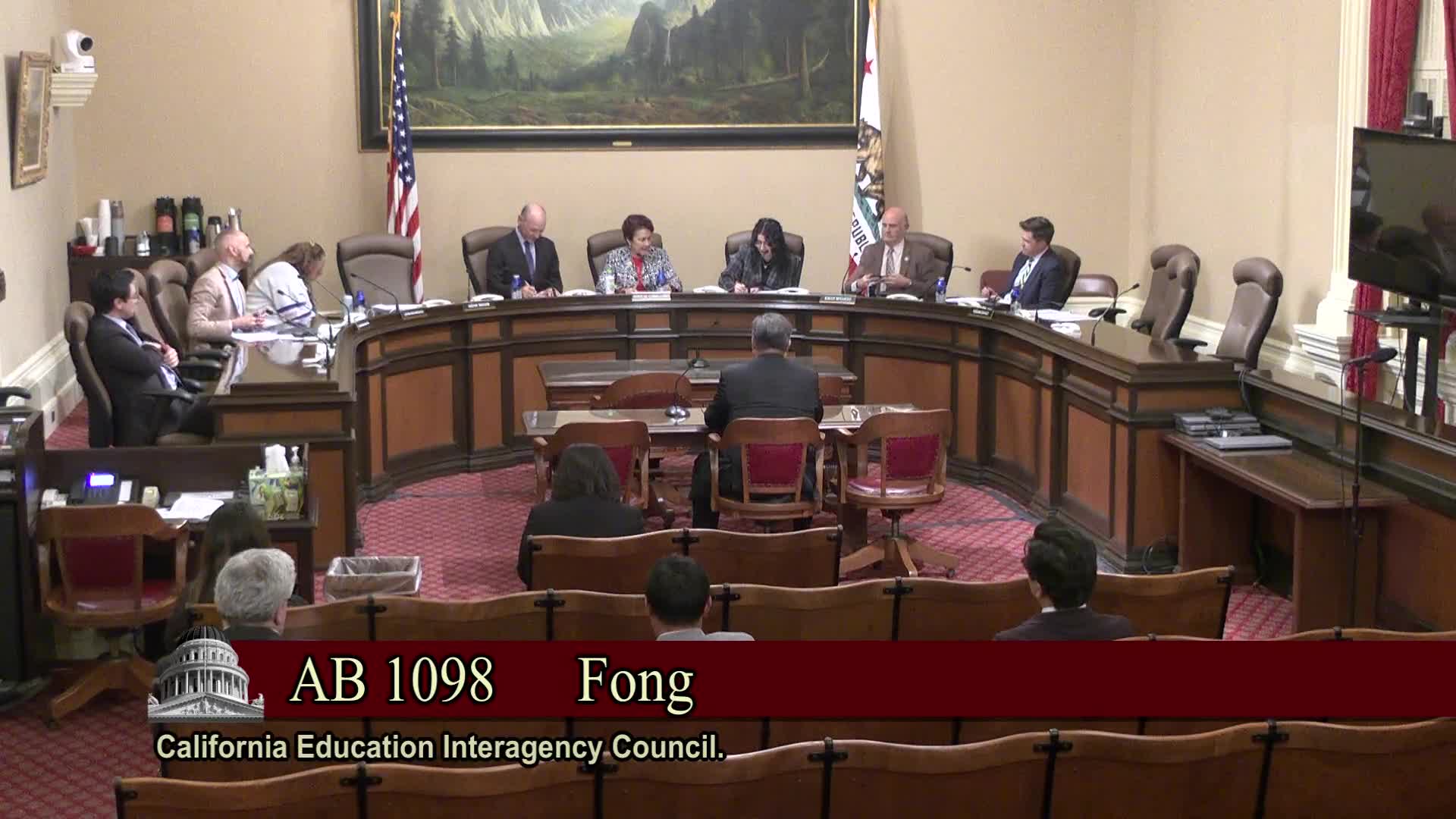
Committee Advances AB 1098 to Establish Interagency Council on Education and Workforce Coordination
Summary
AB 1098 would create a California Education Interagency Council to align K–12, higher education, workforce and labor agencies. Appropriations approved the measure; sponsors said $1.5 million in the budget would seed the council and future funding would be considered by budget committees.
The Senate Appropriations Committee voted to advance AB 1098, which would establish a California Education Interagency Council composed of the heads of K–12, higher education, workforce and labor agencies and representatives of colleges and universities to coordinate policy and funding aimed at better aligning education and career pathways.
Assemblymember Fong, the bill’s author, said AB 1098 implements recommendations from the governor’s master plan for career education and that the 2025 budget includes $1.5 million to establish the council. The measure is paired with a companion Senate bill (SB 638) and supporters said the council would promote coordinated policies across agencies so students can transition to good-paying jobs.
No witnesses testified in opposition in the Appropriations hearing and Department of Finance filed no position. Committee members flagged that the $1.5 million in the budget is a modest start and that the council’s eventual scope and ongoing costs may require further budget scrutiny. The committee approved the bill and reported it to the Senate floor.
Why it matters: AB 1098 aims to institutionalize cross-agency coordination for career education and workforce pipeline policy — an administrative change that could affect program design, funding priorities and interagency reporting.
Next steps: The bill moves to the Senate floor. Budget subcommittees and relevant policy committees may review funding needs if the council’s mandate or staffing expands beyond the initial budgeted amount.