Get Full Government Meeting Transcripts, Videos, & Alerts Forever!
Get email alerts on the Independent Living Resources topic
No spam. Unsubscribe anytime.
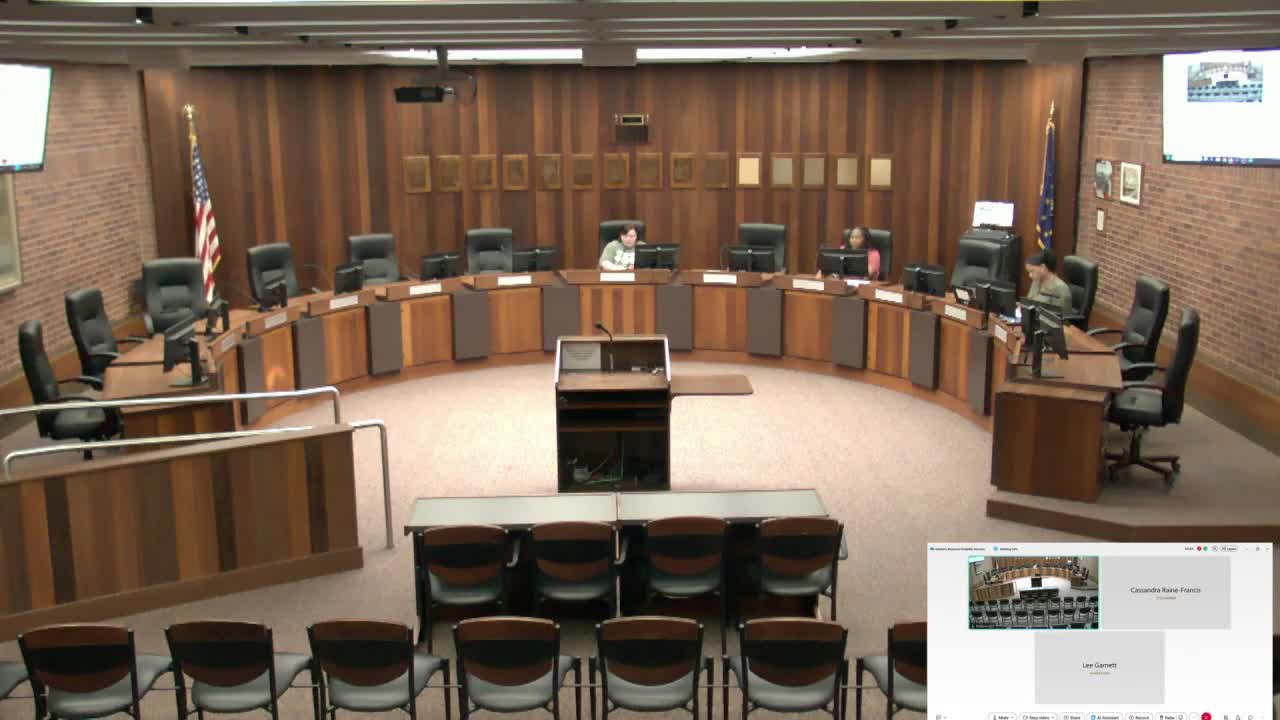
Evansville advisory group discusses independent-living resources and a centralized service website
Summary
Members of an Evansville city advisory board discussed interest in establishing an independent living center for people with disabilities and agreed to compile a local resource website; no formal funding or new center was approved.
Members of an Evansville city advisory board discussed Sept. 5 whether the city needs a disability-focused independent living center and agreed to compile a centralized online resource for residents seeking disability services.
The discussion was prompted by a request from a resident, Megan, who had attended a symposium hosted by a center for independent living. Bridal Crane, chairperson, told members "At this time, we do not have, a disabilities independent living center," and said Megan had asked the group to explore the idea.
Board members and attendees said independent living centers — distinct from retirement-focused "independent living" housing — typically act as resource and advocacy hubs rather than residential service providers. Michelle (participant) said Vocational Rehabilitation "used to" fund independent living centers but "it's not something that they fund any longer," limiting an obvious funding source for launching a new center in Evansville.
Members discussed how the concept differs from local housing and supported-living arrangements such as Jacob's Village, where private-pay and supported-living models coexist; one participant explained people on Medicaid waivers often live in private apartments or share housing with limited waiver-funded staffing rather than in institutional group homes. The group named local apartment complexes known to be widely used by people who receive waiver supports, including Spring Mill and Delaware Trace.
Discussion turned to a more immediate, achievable step: creating a central, easy-to-navigate website or online "one-stop" resource listing local service providers, waiver enrollment steps and contact information. Lee Garnett called the idea "a fantastic idea," and several members volunteered to gather existing materials. Delisa (participant) offered to build the website or app once members compiled contacts and resource information. Members also said the Goodwill Opportunity Center could host or link to the resource.
The board set the following informal directions: members will compile contact information and resource lists and bring them to the next meeting; Delisa will accept materials and prepare a draft site or app for review. No formal vote, funding decision or authorization to create a center was made during the discussion.
Board members noted gaps families often face when seeking services, including navigating the Family and Social Services Administration (FSSA) processes and joining Medicaid waiver waiting lists. Several participants suggested adapting or updating an older EVSC transition guide as a starting point for the web resource.
The board will revisit the compiled resource list at its next meeting, scheduled for the first Friday in October at 11:00 a.m., and pursue outreach via social media in the meantime.