Get Full Government Meeting Transcripts, Videos, & Alerts Forever!
Get email alerts on the State Legislation topic
No spam. Unsubscribe anytime.
Dorchester County legislators briefed on 2026 priorities: passing on shoulders, juvenile crime, legal publication rules and workers’ comp for volunteers
Summary
County delegates met with the council to review proposed bills and priorities ahead of the 2026 Maryland General Assembly session, focusing on a change to the 'passing on the shoulder' statute, rising juvenile crime, publication requirements for county notices and workers' compensation classifications for volunteer fire company members.
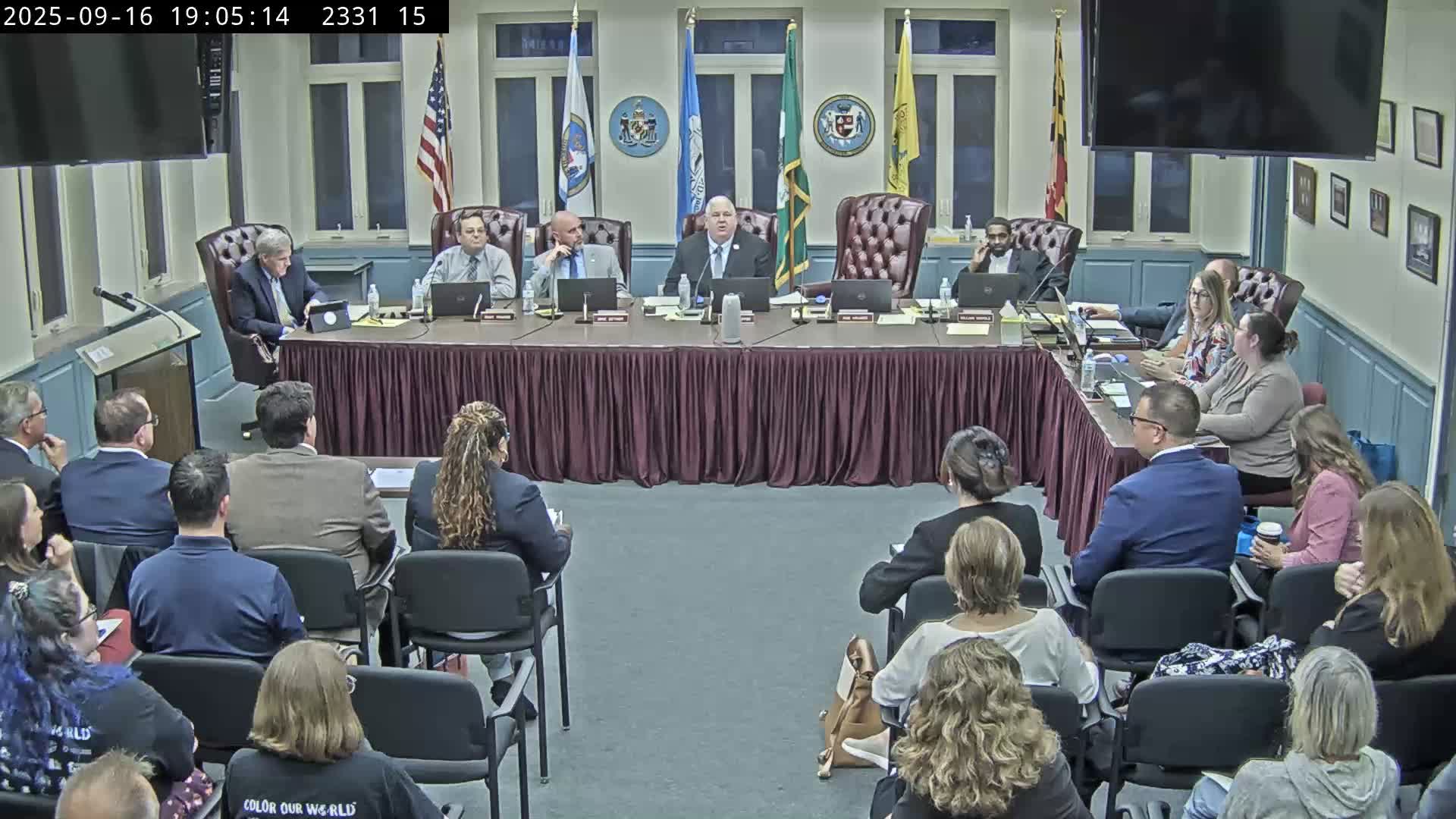
Dorchester County’s elected delegates and state senators met with the County Council Sept. 16 to hear local requests for the 2026 Maryland General Assembly session and to give feedback on issues the delegation may pursue.
Del. Sample Hughes and other delegation members discussed a range of proposals. Topics the county wants to raise in Annapolis include reversing or amending a change to the transportation article that allows passing on shoulders in certain circumstances, legislative responses to rising juvenile crime and auto theft, relief from statewide legal publication requirements for low‑value leases and transactions, and a proposal to allow different workers’ compensation classifications for volunteer fire company members performing administrative (lower‑risk) duties.
Why it matters: These items, if enacted, would change state law or state administrative practice and directly affect county operations, public safety, volunteer fire companies and local government costs. Several council members emphasized concerns that statewide, one‑size‑fits‑all mandates can impose disproportionate burdens on rural counties.
Highlights from the discussion: - Passing on shoulders: County law enforcement raised a safety concern about a statutory change that allows vehicles to pass stopped cars on shoulders in some left‑turn situations. Delegation staff asked the county to provide written material so MDOT legislative affairs can evaluate the best path forward. - Juvenile crime: Council members described persistent juvenile offending, including auto theft, and discussed prior juvenile reform task force work. Delegation members said a previous bill to change the age at which a juvenile can be charged as an adult did not pass but may return; they urged the county to obtain task‑force reports for committee review. - Publication requirements: The county asked for statutory relief to avoid high printing and legal costs when advertising nominal leases and small, in‑kind agreements. Delegation members suggested presenting a narrowly tailored bill or mirroring existing COMAR language used by other counties. - Workers’ compensation for volunteers: The county asked for flexibility to classify administrative volunteer fire company members differently from active firefighters to lower insurance costs. Delegation members cautioned that the subject is complex, raises questions about cross‑duty exposure and that strong support from local fire companies would improve the bill’s reception in committee.
What happens next: Delegation staff asked the county to provide written drafts and evidence (costs, legal citations and sample county code or COMAR language) to evaluate the legislative approach during pre‑file season in November. Delegates offered to discuss bills with relevant committee chairs and agency legislative affairs staff.