Get Full Government Meeting Transcripts, Videos, & Alerts Forever!
Get email alerts on the Noise And Enforcement topic
No spam. Unsubscribe anytime.
Panel backs special legislation to let Revere enforce noise fines under state sanitary code
Summary
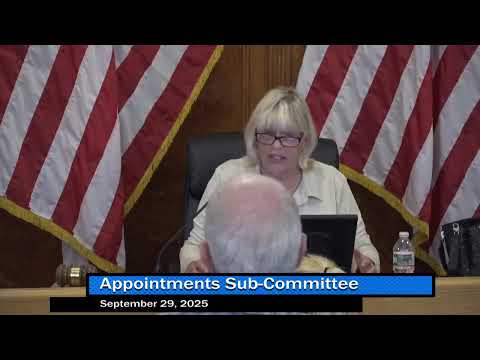
The Legislative Affairs Subcommittee on Sept. 29 voted unanimously to recommend a special act allowing the City of Revere to establish penalties and liens for noise ordinance violations and to permit local enforcement under state sanitary code section 40U, with inspectors coordinating with police and decibel readers proposed for cruisers.
The Revere City Legislative Affairs Subcommittee on Sept. 29 voted unanimously to recommend special legislation that would allow the city to impose penalties and liens for noise‑ordinance violations and keep enforcement local under the state sanitary code provision known in the meeting as “40 U.”
Councilor Anthony Cogliandro (Ward 3) presented the motion, saying the current enforcement codified under a local reference called “21 D” “really has no teeth” and that citations often are not enforced once they leave city control. Cogliandro said the change would allow the city to retain enforcement and would support equipping police cruisers with decibel meters.
“I think everybody in here can agree that we do have responsible people in the city that play their music or make noise, have parties, but at a certain time, they tone it down,” Cogliandro said, adding that the proposal is intended to address the minority who do not respect neighbors.
Councilor Novoselski said putting enforcement under 40 U would keep violations “in house” rather than having tickets go to outside court locations where they are frequently dismissed. He said he had discussed the approach with Chief Levita, who he described as “totally in favor” of allowing Revere police to enforce under 40 U and to use decibel readers in patrol cars.
Michael Wells, Revere’s director of Inspectional Services and health agent, said his department oversees the 40 U process and asked that the Inspectional Services Department (ISD) act as the gatekeeper for fines issued under the sanitary code. Wells explained that fines under 40 U are attached to properties — not to individuals — and can be transferred to tax bills if unpaid. “40 is attached to a property. So I can’t find a business. I can’t find a, a person. We’re finding a property,” Wells said. He described prior coordination with police under a previous chief, in which police reports were attached to violations to assist enforcement.
Councilor Kelly asked whether enforcement would leave discretion to officers (for example, first‑time offenses or time of day). Councilor Caldera replied that the ordinance’s penalty structure is not changing and that the motion changes only the means of issuing fines.
At roll call the subcommittee recorded unanimous support to forward the special legislation to the full City Council. The clerk read affirmative votes from Councilor Greeno Suaya (yes), Councilor Haas (yes), Councilor Kelly (yes), Councilor McKenna (yes) and Chairman Argenzio (yes). The subcommittee recorded: “Yes. The special act has received a favorable recommendation.”
Next steps require the special legislation to proceed through the full City Council and then the state legislative process for a city-specific act; the transcript does not record those subsequent steps or any enacted effective date.
Speakers identified in the discussion included Councilor Anthony Cogliandro; Councilor Novoselski; Councilor Kelly; Councilor Caldera; Michael Wells, director of Inspectional Services and health agent; Councilor Haas; and Chairman Argenzio.