Get Full Government Meeting Transcripts, Videos, & Alerts Forever!
Get email alerts on the Anti Bias Rule topic
No spam. Unsubscribe anytime.
Divided Public Comment on Proposed Rule Barring Bias, Prejudice and Harassment; Grievance Commission Backs Revision
Summary
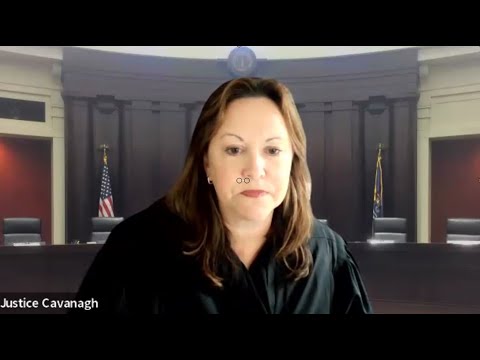
The Michigan Supreme Court received sharply divided oral comment on a proposal to add language to Canon 3 and MRPC 6.5 prohibiting bias, prejudice and harassment in the legal process.
The Michigan Supreme Court received extensive oral comment for ADM file 2023-35, a proposal to amend Canon 3 of the Michigan Code of Judicial Conduct and Michigan Rule of Professional Conduct 6.5 to prohibit bias, prejudice and harassment in the legal process.
Speakers were sharply divided. David Peters of the Pacific Justice Institute and representatives of religious-liberty and Catholic groups warned the proposed language could compel speech and burden religious exercise. Peters urged the court to protect conscience, arguing the proposal risks "forcing Christians to state beliefs with their own mouth that are contrary to what has been believed to be holy scripture for thousands of years." Laura Namo of the Christian Legal Society said the proposal is effectively a speech code for lawyers and could criminalize vigorous advocacy on controversial topics.
William Bloomfield, general counsel for the Catholic Diocese of Lansing, told the court the existing rules requiring courtesy and respect are sufficient and that the new language is vague and could be used to penalize judges and lawyers for expressing religiously grounded views. "The proposed rules impermissibly regulate speech and infringe the free exercise of religion," Bloomfield said, citing recent federal decisions on religious-liberty claims.
By contrast, Kimberly Uhuru, speaking for the Attorney Grievance Commission, urged adoption of the proposed amendments to strengthen protections against discrimination in the legal process while also recommending the court retain the existing courtesy-and-respect language to address incivility. "The commission supports the proposed language," Uhuru said, but asked that the current civility provision be preserved because it helps address non-bias-related uncivil conduct.
Other speakers opposed removal of the existing language requiring lawyers to treat all persons with courtesy and respect and warned of chilling effects on zealous advocacy and free expression. Michael Lieb and William Wagner urged keeping the courtesy-and-respect provision; Wagner argued the proposed wording would be subject to strict constitutional scrutiny and could invite viewpoint discrimination. Marcia McBrien said the proposal risks creating a culture of "walking on eggshells" that could deter attorneys from raising difficult legal arguments. Longtime practitioner Bob McGill said the change would burden judges and lawyers and invite frivolous grievance filings.
The court did not take a vote at the hearing; the oral remarks were entered into the public comment record for the court's consideration.