Get Full Government Meeting Transcripts, Videos, & Alerts Forever!
Get email alerts on the Housing Affordability Equivalency topic
No spam. Unsubscribe anytime.
Residents urge Charter Review Committee to examine ‘equivalency’ that they say has undermined 10% affordable-housing requirement
Summary
Several Penryn‑area residents told the Placer County Charter Review Committee that a county code provision known as “equivalency” has allowed developers to avoid a charter‑referenced 10% affordable‑housing requirement for large projects.
Several Penryn-area residents told the Placer County Charter Review Committee that a county code provision known as “equivalency” has allowed developers to avoid a charter‑referenced 10% affordable‑housing requirement for large projects.
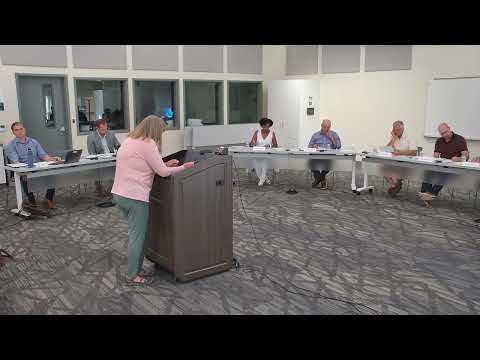
Brian Myers, chairman of Placer Citizens for Neighborhood Rights, told the committee he had reviewed the charter and the county code and said an equivalency provision in Placer County’s land‑use code has been used “to avoid the 10% requirement,” leaving few affordable units built in unincorporated areas. Myers cited the county’s own Housing Action Plan, saying it shows zero very‑low‑income units completed in the unincorporated area and a heavy skew toward above‑moderate housing.
Donna Delano, a 25‑year Penryn resident, said a proposed high‑density project near Hope Way could “double our tiny town population” and asked the committee to recommend code changes to prevent planning staff from waiving the 10% obligation. Mariel Davis and other commenters urged clearer rules to protect riparian areas and community plans when rezones and specific plans are considered.
Speakers asked the Charter Review Committee to request staff research on three items: (1) the text and history of the county code provisions labeled “equivalency” and how they have been used in practice; (2) whether the planning director’s authority to approve equivalency is properly constrained; and (3) whether approvals using equivalency have produced land or housing units that meet the intent of the 10% requirement.
County staff told the committee that equivalency proposals follow the approval path of the related project: proposals that require a discretionary hearing body go to that hearing body (for example planning commission or board of supervisors); ministerial projects pass to the agency director or designee. Committee members asked staff to return with examples of projects that used equivalency and with documentation showing where the affordable requirement was satisfied (land donations, fees collected, or units built).
The committee did not adopt a formal recommendation at the meeting; members asked staff to prepare a focused briefing that explains the legal framework (county code, charter interaction and any state constraints) and lists recent projects where equivalency was applied.