Get Full Government Meeting Transcripts, Videos, & Alerts Forever!
Get email alerts on the Mobile Vending topic
No spam. Unsubscribe anytime.
El Centro council approves first reading of updated mobile-vending rules, clears path for 12-hour street vending
Summary
City council approved the first reading of an ordinance consolidating mobile-vending rules, creating a 12-month vendor permit and allowing food trucks to operate in street parking lanes under new safety buffers and time limits. The ordinance proceeds to a second reading and adoption on Oct. 21.
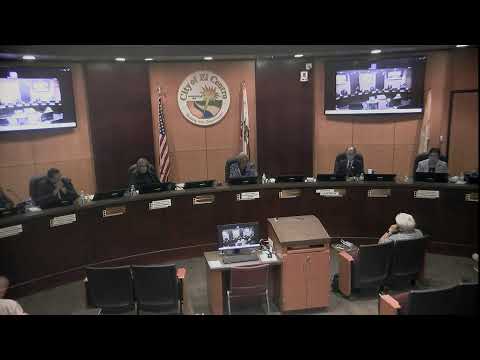
The El Centro City Council approved the first reading of an ordinance to consolidate and update the city’s mobile-vending rules, clearing the way for street vending but adding new permit and safety requirements.
The measure creates a 12‑month mobile‑vendor permit (staff proposed a $100 annual fee), consolidates vending rules that previously appeared in multiple chapters of the municipal code, and permits food trucks and trailers to operate in nonresidential on‑street parking lanes for up to 12 hours per day subject to buffer and safety restrictions. Angel Hernandez, city planner, told the council the ordinance’s purpose is “to consolidate the different regulations for mobile food vendors, sidewalk vendors, and those vending in public parks into one section of the city code.”
Staff emphasized safety and predictability: sidewalk vendors must leave a 5‑foot clear pedestrian passage, stationary sidewalk vending is limited to 2 hours, vending is prohibited on streets with speed limits above 35 mph or at specified congested corridors, and vendors must avoid blocking driveways, bus stops and fire hydrants. The draft also requires vendors selling on public rights‑of‑way to carry up‑to‑date insurance and gives staff authority to revoke permits for repeat noncompliance.
Hernandez said the revisions respond to vendor feedback and state law changes and that staff will publish maps and guidance on permitted locations. At the council workshop and stakeholder meetings vendors had said 2 hours was too restrictive for many operations, so staff extended the allowable street time to 12 hours to reflect setup and cooking needs.
Councilmembers asked about enforcement and parking‑limit conflicts; Hernandez said vendors must obey posted parking limits (for example, if a space is 2‑hour parking, vendors must move when the sign requires). The council opened the public hearing, received no public testimony and voted 5‑0 to approve the first reading. The ordinance returns to the council for final adoption on Oct. 21, with staff materials and a GIS map of allowable vending locations to accompany the second reading.