Get Full Government Meeting Transcripts, Videos, & Alerts Forever!
Get email alerts on the Legal Finance topic
No spam. Unsubscribe anytime.
Walton County to refund mobility fees after state law; commissioners say legal limits leave little choice
Summary
The county approved refunds for mobility fees collected before the effective date of Senate Bill 180, after legal staff advised the board the fees are void ab initio and must be returned; commissioners expressed reluctance but voted to begin processing roughly $1.5 million in segregated impact-fee funds.
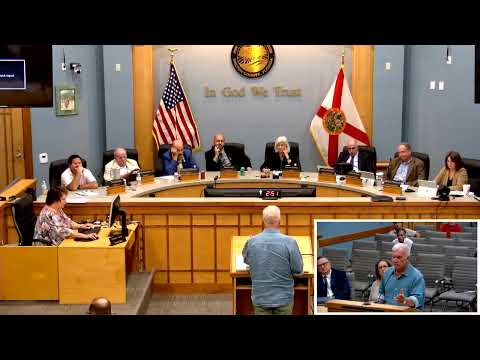
Walton County commissioners voted to authorize refunding mobility (impact) fees collected before the effective date of Senate Bill 180 after county legal and financial staff said the fees were invalid under the new state law.
"The effect of the bill...was to declare our ordinance void ab initio," county legal counsel told the board, meaning staff said the fee "never existed" as of the bill’s retroactive date and the county must refund fees collected during the period the local ordinance was deemed invalid. County staff described the total refunds as "about $1.5 million," and said the fees are held in segregated impact-fee accounts rather than the general fund.
Commissioners said they objected to the result and to earlier legal and legislative changes that forced the refunds. "I don't have an issue with going through the work activities to relieve the stress from the CFO's work team to get ready to hold the funds until we have to release them rather than just release them," one commissioner said, urging compliance to avoid audit risk. County staff warned that holding funds that are not legally collectible would increase litigation exposure and could create audit problems if the county did not comply with the statute.
County attorney and staff said other counties are contesting SB 180 in litigation but that Walton County had opted to work with lobbying teams and its state delegation to seek legislative fixes rather than engage in costly, long-running lawsuits. Legal staff also explained the practical limits: because the statute is retroactive to Aug. 1, 2024, fees collected between Aug. 1 and the effective date must be refunded.
Officials said some mobility-fee revenue had been earmarked for multi-year, project-specific capital uses and therefore was not included in the general fund or the current operating budget, but the segregated account rules and the four-year reserve limits in the Florida statute constrained the county’s options.
Commissioners voted—by recorded voice—to approve processing the refunds and to direct finance staff to begin refund procedures before the fiscal year-end to reduce audit exposure.
No litigation was initiated at the meeting; commissioners said they would continue to work with their lobbyists and legislators to seek statutory relief while ensuring legal compliance in the near term.
The refunds will be processed by the county finance department using the segregated impact-fee accounts and in compliance with Florida statute timing requirements.