Get Full Government Meeting Transcripts, Videos, & Alerts Forever!
Get email alerts on the Ab501 Outdoor Education topic
No spam. Unsubscribe anytime.
State law AB 501 draws Lyon County School Board interest; trustees ask staff to draft credit policy
Summary
Representatives from state outdoor agencies and local nonprofits described programs that could qualify under AB 501 for elective outdoor education credit. Trustees asked staff to craft a vendor/contract process and bring a policy for first reading at a future meeting.
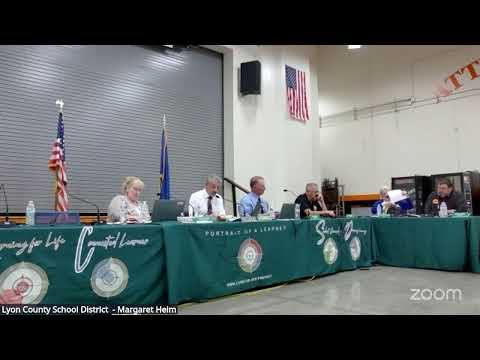
The Lyon County School Board on Tuesday hosted a broad group of state and local outdoor education providers to discuss AB 501, a new Nevada law that allows school districts to award elective credit for verified out‑of‑school outdoor education and recreation.
State and nonprofit presenters told trustees that established programs — including hunter‑education, archery, fly‑fishing, trail restoration and multi‑day outdoor skills camps — already document participant hours and learning outcomes and could be used as verified opportunities for credit hours.
Why it matters: AB 501 is designed to acknowledge time spent learning outside the classroom, from conservation work and trail building to organized scouting and 4‑H shooting sports. If Lyon County adopts procedures to approve vendors and verify hours, students could earn elective credits for supervised, documented outdoor learning performed outside regular school hours.
Who spoke: Garrett Tomani from the lieutenant governor’s office and Kendall Scott of the Nevada Division of Outdoor Recreation explained the law and recommended a vendor‑verification approach so that trusted organizations can log participants’ hours. Julie Bliss of the Nevada Department of Wildlife described existing programs — hunter education, archery, fly‑fishing, birding, paddling and wild‑game cooking — and said the department can already generate participant reports. Representatives from Scouting America, Girl Scouts of Sierra Nevada, 4‑H, Walker River Bowmans (archery), Mason Valley Gun Club and the Mason Youth Outdoor Skills Camp described local programming and training, including background‑checked instructors and established attendance verification systems.
Trustee and staff response: Trustees praised the idea as a way to engage students who may not follow the traditional academic path and to expose students to career and outdoor stewardship opportunities. Director of Curriculum and HR staff said policy details need to address vendor vetting, background checks, documentation of hours and limits (for example, credit caps so students cannot substitute outdoor hours for a full course load). Board members asked staff to draft a formal policy and a contract/independent‑study template that defines how hours, mentors and learning outcomes will be verified.
Next steps: Director Gianotti (curriculum) and Superintendent Logan were tasked to produce a draft policy and vendor/contract process for board review. Trustees asked for a first reading in the next one to two board meetings; staff said they would return with a first reading and recommended procedures for approving organizations and individual student proposals. No final action or vote was taken Tuesday.
Voices of providers (highlights): - Scouting America urged sign‑off by unit leaders and offered training, insurance and programs demonstrating leadership, trail work and habitat projects. Scouting noted guzzler (wildlife water source) projects and conservation work as clear examples of verifiable hours. - Nevada Department of Wildlife noted that some programs (hunter education, fly‑fishing trips, muzzleloader/trap shooting) can already produce attendance and hours reports and that harvesting an animal contains additional learning steps (field dressing, preparation). - 4‑H leaders highlighted shooting‑sports certification, navigation and shelter‑building skills taught by certified, background‑checked instructors and cited national research linking 4‑H participation to later educational and workforce success.
What trustees asked staff to include in the draft policy: methods to vet and require background checks for external instructors, a student independent‑study template for approval, caps on elective credit awarded for outside hours, an appeals or review process for nontraditional proposals, and a mechanism to add additional reputable vendors over time.
Votes or formal actions: Trustees did not vote on adopting a policy. The board directed staff to draft vendor/contract language and return a first reading in upcoming meetings.