Get Full Government Meeting Transcripts, Videos, & Alerts Forever!
Get email alerts on the Housing Displacement topic
No spam. Unsubscribe anytime.
Santa Clara staff outline anti‑displacement work plan, ask council for feedback
Summary
City staff presented a study session on anti‑displacement actions embedded in the housing element, describing 21 related actions, potential new tenant protections and programs, and next steps including outreach and a spring 2026 return to council.
City staff on Tuesday briefed the Santa Clara City Council and Stadium Authority on a multi‑part anti‑displacement work plan tied to the city’s May 2024 housing element and sought council feedback before returning in spring 2026.
The study session focused on types and drivers of displacement, implementation priorities and state law the city must follow to remain eligible for regional grant programs. “There are 21 housing element actions related to anti displacement,” Asha Hamid, the city’s director of community development, told the council. She said local implementation is required to preserve city eligibility for certain regional and state funding programs.
The presentation framed solutions under the three P’s used in regional planning: protection (tenant stabilization), preservation (keeping existing housing affordable), and production (building new housing). Adam Marcus, the city’s housing and community services manager, reviewed measures already underway (tenant/landlord dispute resolution, county homelessness prevention funding, capital projects with affordable housing partners) and grouped future work into three buckets: (1) actions underway, (2) actions committed to implement, and (3) actions the city will evaluate further.
Major near‑term items staff listed as “committed to doing” include: working with the housing authority on outreach to encourage landlords to accept housing vouchers; proposing an ordinance requiring landlords to give a city‑approved tenant rights brochure in multiple languages at lease signing; creating a database to track naturally occurring affordable housing (NOAH); monitoring at‑risk deed‑restricted units; and returning with a Nexus and Feasibility Study to reevaluate the city’s inclusionary requirements.
A third group, “actions committed to evaluating,” covers options that require more study before the city could implement them. Staff said these candidates include a local “no net loss” rule for income‑restricted units (replacement at the same or deeper affordability), stronger local relocation benefits beyond state minimums, requiring longer tenant notice before redevelopment, enhanced proactive code enforcement for multifamily housing, and a community opportunity to purchase program to give nonprofit developers a first chance to buy at‑risk buildings.
Staff emphasized the link between anti‑displacement work and state law. Marcus summarized recent state changes including the Tenant Protection Act (2020), the Housing Crisis Act, and modifications to tenant security deposit rules; he said some new protections are vague or require local enforcement, so Santa Clara needs local programs to make the state laws effective.
The city has partnered with the Santa Clara County Planning Collaborative and the Community Planning Collaborative, which is providing technical assistance and countywide coordination. David Driscoll, project lead for the Collaborative, described a countywide survey and focus groups and staff resources the county group has assembled, including a displacement risk model developed by the Urban Displacement Project at UC Berkeley and a policy toolkit that member cities can use.
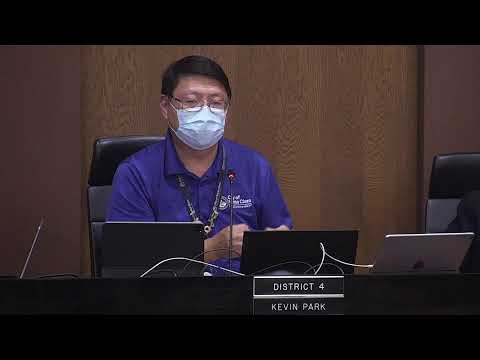
Council members pressed staff on specifics. Councilmember Hardy urged a robust tenant‑rights outreach program, multilingual materials and clearer help for residents seeking housing assistance. Councilmember Jane asked how the NOAH database would work and pressed for “proactive enhanced code enforcement” to protect tenants who fear retaliation. Councilmember Park raised questions about data—pointing to the high Area Median Income (AMI) for the Bay Area and the difficulty of defining the “jobs per housing unit” metric—and urged careful review of the point‑in‑time homelessness counts.
Staff said outreach is already under way: a community survey and event outreach that began in August and will continue through January, targeted community meetings and focus groups with service providers; staff reported more than 400 survey responses from Santa Clara residents so far. Staff recommended a spring 2026 return to council with analysis and a public hearing in May 2026 to inform policy choices. Jevon Grogan, the city manager, said staff will return with a work plan and cost estimates as engagement and analysis proceed.
What’s next
Staff will continue community outreach, complete data analysis through April 2026 and return to council with recommended program details next spring and at a public hearing in May 2026. The presentation materials and the county’s survey are available on the city’s project page, and the county’s SantaClaraLetsTalkHousing.org portal will publish survey results later this fall.
Why this matters
City staff said timely local action on the housing element is needed to both prevent displacement and maintain eligibility for regional and state housing grants; staff also noted that local implementation choices will determine how well state tenant protections actually help Santa Clara households.