Get Full Government Meeting Transcripts, Videos, & Alerts Forever!
Get email alerts on the Fleet Maintenance Facility topic
No spam. Unsubscribe anytime.
Syracuse fire department warns unsafe floor at 312 State Fair Blvd. forces emergency search for maintenance space
Summary
The Syracuse City Common Council heard Tuesday that the fire department’s maintenance garage at 312 State Fair Boulevard has been declared unsafe for vehicle lifts and heavy loads after a concrete slab failed, and city staff are pursuing short-term leased or purchased space to protect roughly $15 million to $20 million in spare apparatus.
The Syracuse City Common Council heard Tuesday that the fire department’s maintenance garage at 312 State Fair Boulevard has been declared unsafe for vehicle lifts and heavy loads after a concrete slab failed, and city staff are pursuing short-term leased or purchased space to protect roughly $15 million to $20 million in spare apparatus.
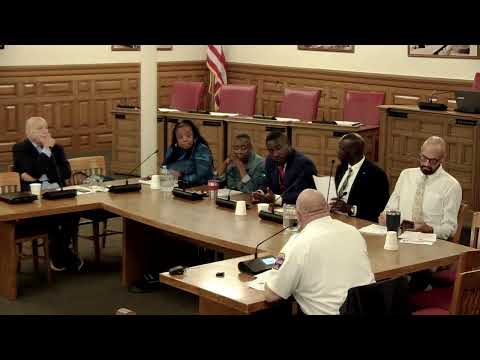
Fire Department leadership described the immediate situation and the next steps at a council meeting. The Fire Chief said the facility’s floor was declared unsafe after a lift jack penetrated the slab on July 18, revealing “severe structural damage,” and that city engineering and assessment teams have restricted vehicle and some foot traffic. “We basically have a gun to our head,” the Fire Chief said, adding mechanics have been working outdoors and in one Syracuse University garage bay on an emergency, limited basis.
Why it matters: The maintenance division handles preventive maintenance, acquisitions and repairs for a fleet of 113 vehicles and also supports upkeep of fire stations and other fire facilities. Councilors were told that without an indoor maintenance facility, weather will soon prevent repairs, increasing the risk that frontline apparatus will be out of service and that spare vehicles could be damaged by freezing temperatures.
City staff walked councilors through history and options. The Fire Chief said the building was built in 1969 and that modern fire apparatus are two to three times heavier than earlier models. City engineering and CNS (assessment) performed a facilities assessment that initially identified floor cracking; staff then notified the New York State Department of Environmental Conservation and opened a spill report because sanitary sewer and oil-water-separator lines under the slab were exposed when the slab failed. Ian Brown of the city’s engineering/assessment team was listed as the contact for technical questions.
To find a temporary solution the city issued a request for qualifications (RFQ) for buildings that could be leased or purchased as a turnkey maintenance or storage site. Michael Layman, the city RFQ point person, told the council the RFQ sought sites roughly in the 15,000–25,000 square-foot range and that roughly half a dozen responses were returned and are being evaluated. The RFQ review committee met the day before the council hearing and expected to identify one or two top candidates within about a week for further due diligence.
If an RFQ candidate cannot immediately accommodate maintenance operations, staff said they will seek space at least for secure indoor storage to prevent freezing and corrosion of spare apparatus. The chief said Syracuse University is currently allowing use of one garage bay “at no cost — I think we got an agreement for a dollar” — but that the bay fits only the largest trucks “barely” and can be used only about once per day. City staff warned the localized availability of buildings that meet height, door size and floor-thickness requirements is limited and many suitable properties are already occupied.
Costs and schedule. Staff said an engineering and cost analysis for repairing and modernizing 312 State Fair Boulevard is underway; initial estimates provided to councilors include a two- to five‑year planning and reconstruction horizon for the site. The Fire Chief asked the council to be prepared to consider emergency legislation to lease or buy an identified temporary facility quickly if negotiations require actions outside the standard RFQ timetable. Council members estimated the RFQ and due diligence would likely take at least a month; the Fire Chief said staff would try to submit emergency legislation that could be added to the next council agenda as soon as a building is identified.
Councilors and the deputy mayor asked about alternatives and risks. Councilor Majuk asked what the council could do to help; the Fire Chief requested possible emergency funding to retrofit a temporary heated space if needed. Deputy Mayor Sharon Owens said she and colleagues were working with fire, finance and engineering staff and asked for the retrofit and repair cost estimates and the RFQ findings once they are available. Staff also noted that moving some operations to the Department of Public Works was estimated to cost about $800,000 because of capacity limits and required modifications.
Other technical notes. Staff said some apparatus are still under warranty and that outsourcing repairs to specialized vendors can be expensive and backed up for many months. The Fire Chief said the objective is to keep mechanics working in a safe indoor environment, then return operations to 312 State Fair Boulevard if the renovated site can meet future apparatus size and weight requirements, and said the department would aim to expand the facility footprint if it is rebuilt (staff cited a target rough footprint of 120 by 60 feet versus an estimated current 60 by 60 feet).
No formal votes or legislation were taken at the meeting. Councilors repeatedly thanked fire mechanics and city staff for their emergency work while the RFQ and engineering assessments continue.