Get Full Government Meeting Transcripts, Videos, & Alerts Forever!
Get email alerts on the Infrastructure And Economic Development topic
No spam. Unsubscribe anytime.
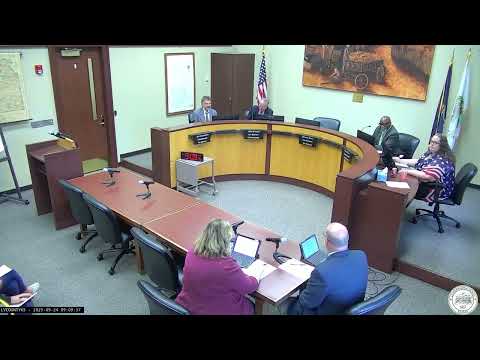
Leavenworth County commissioners press KDOT on K‑7 planning, debate Port Authority funding and LCDC role
Summary
A group of Leavenworth County commissioners expressed frustration with Kansas Department of Transportation planning and funding decisions and opened a wider discussion about how county economic development money is being held and spent.
A group of Leavenworth County commissioners expressed frustration with Kansas Department of Transportation planning and funding decisions and opened a wider discussion about how county economic development money is being held and spent.
Commissioners raised the K‑7 corridor as a long‑running example. A member of the commission said Leavenworth County has had a corridor study for more than 20 years and that projects identified locally have not been carried through by KDOT. Commissioners said KDOT placed work on other corridors, and pointed to large planned spending on K‑10 (referenced in the meeting as roughly $1.2 billion) while they see little progress on K‑7 projects inside Leavenworth County.
Why it matters: commissioners said project selection and grant awards rely heavily on official traffic counts. One commissioner said the K‑7 traffic counts used by KDOT (reported in the meeting as about 20,000 vehicles per day) are too low and asked whether the county may legally deploy its own counters; county staff said state law and KDOT rules generally prohibit placing counters in the state right of way. Commissioners said undercounting can affect eligibility for projects and grant funding.
County staff and commissioners discussed practical recourse: county staff offered to pass a reported pothole and location to the district engineer and encouraged documentation so the state will respond. The board also discussed informal options for independent traffic studies that avoid placing equipment in the state right of way, including camera systems placed off the right of way (offered by a resident during public comment).
Separately, commissioners debated oversight and purpose of two entities that work with the county on economic development: the Leavenworth County Development Corporation (LCDC) and the Port Authority. Commissioners said the Port Authority’s reserve accounts contain funds derived from county contributions and asked whether those reserves should be directed toward projects such as an industrial park rather than funding ongoing LCDC operations. Several commissioners urged a clearer, countywide plan for industrial development and closer communication among the county, the Port Authority and LCDC.
The board discussed a recent LCDC vote to decline a county request (described in the meeting) related to industrial‑park funding and criticized what at least one commissioner described as limited communication and lack of explicit alternative proposals from LCDC when it voted against the county’s request. Commissioners asked county staff to schedule a fuller briefing and suggested asking Port Authority and LCDC representatives to appear at a future meeting.
Other infrastructure updates recorded in the meeting: county staff announced County Road 30 construction will begin earlier than expected and that an appropriation letter from Congressman Moran’s office said $6,000,000 was included in the next appropriation for Dempsey Road to U.S. 92; the meeting also referenced an additional $2,000,000 toward County Road 30 contingent on matching funds.
What the county will do next: commissioners asked staff for a packet on Port Authority and LCDC finances, requested a future agenda item to clarify whether the county can retrieve or reallocate funds, and asked staff to coordinate direct contact with state legislators to press KDOT for better follow‑through on locally identified K‑7 projects.
Ending: a resident at the meeting offered to provide contacts for off‑right‑of‑way camera options for independent traffic studies; commissioners said they would follow up with staff and the district engineer as appropriate.