Get Full Government Meeting Transcripts, Videos, & Alerts Forever!
Get email alerts on the Fuel Supply Stability topic
No spam. Unsubscribe anytime.
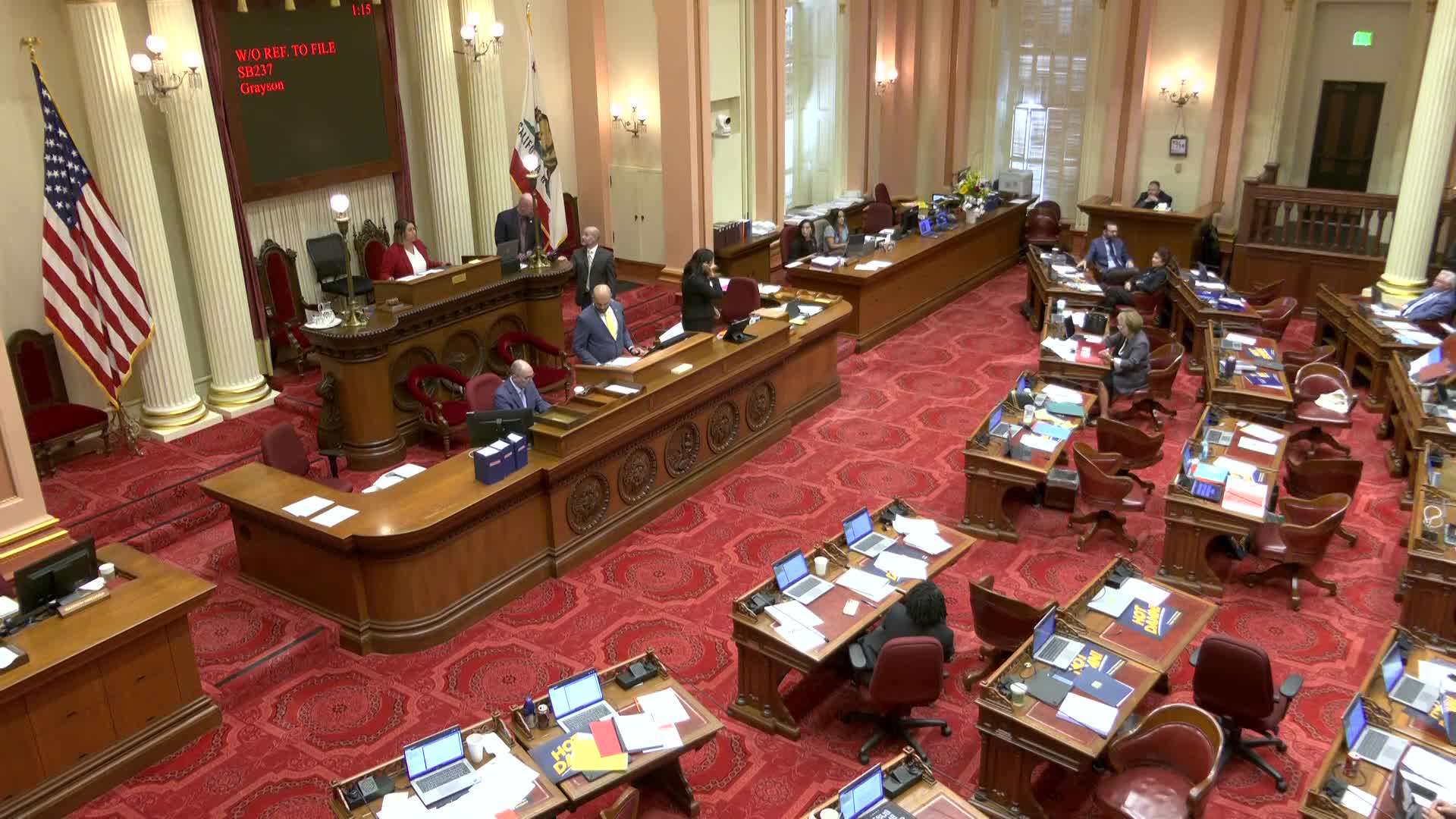
Senate advances SB 237 to stabilize fuel supply, codify Kern County EIR and extend mid-transition measures
Summary
The Senate approved SB 237 on Saturday, a bill that validates Kern County's supplemental environmental impact report for oil production and includes provisions intended to stabilize fuel supplies during California's transition away from fossil fuels.
The Senate on Saturday approved SB 237, a measure supporters said will stabilize California's retail fuel supply and blunt price spikes while the state manages a mid-transition away from fossil fuels.
Sponsor Senator Grayson said SB 237 implements elements from a California Energy Commission (CEC) report intended to lower consumer gasoline prices while giving refiners and producers clearer signals that would sustain in-state supply. Key components include validation of Kern County's second supplemental environmental impact report (EIR) by statute, a 2035 sunset for the approval framework with revision requirements by 01/01/2036, and a cap of up to 2,000 wells under the authorized plan. The measure also includes provisions to advance offshore and pipeline provisions and to allow the governor, under certain conditions, to suspend summer fuel-blend requirements.
Why it matters: Sponsors framed SB 237 as a practical step to preserve in-state production capacity, protect jobs in producing regions and avoid heavy reliance on imported refined fuels during an energy transition. Proponents, especially senators representing Kern County and other producing regions, emphasized local economic harm when permits and investment decline.
Opposition and concerns: Critics, including environmental and transition-focused senators, warned the bill gives too little attention to an explicit asset-retirement and holistic transition strategy. Some senators urged stronger requirements for addressing long-term refinery closures, decommissioning liabilities and workforce transition planning. Debate also touched on CEQA, pipeline safety and equity for fence-line communities.
Key negotiated items and limits: The transcript records a 10-year sunset discussion (through 2035 in floor remarks), a cap of 2,000 new wells under the codified EIR, and requirements to respect setback and pipeline safety rules noted in the bill language and floor statements.
Roll call and outcome: The Senate recorded a floor vote after debate. The transcript shows the measure moved forward and the recorded vote on the assembly concurrence was Ayes 28, Noes 0 on the urgency/assembly-concurrence step.
Next steps: The bill calls for a CEC-coordinated study and interagency work to address the mid-transition challenges; supporters said further work is needed to craft retirement obligations and workforce transition packages in follow-up legislation.