Get Full Government Meeting Transcripts, Videos, & Alerts Forever!
Get email alerts on the Personnel Compensation topic
No spam. Unsubscribe anytime.
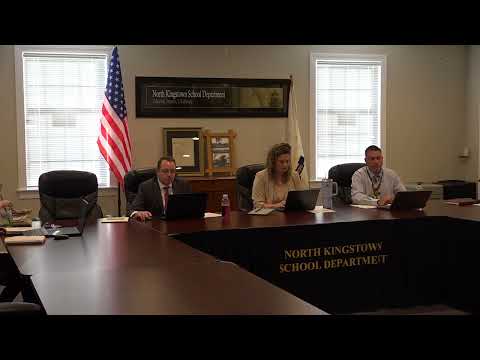
Policy advisory committee forwards proposed GCB personnel revisions after debate over merit pay and retirement terms
Summary
The North Kingstown Policy Advisory Committee voted Sept. 22 to send proposed revisions to the district's GCB personnel policy to the full school committee, after extensive discussion about retirement eligibility, whether to keep merit pay or convert it to base increases, and the policy's fiscal impact.
The North Kingstown Policy Advisory Committee on Sept. 22 voted to forward proposed revisions to the district's GCB personnel policy to the full school committee, including administration recommendations on merit pay and retirement provisions. Committee members discussed how the changes would affect employee benefits, long-term district costs and alignment with negotiated contracts.
Committee members and staff debated multiple sections of the draft GCB policy. Human resources staff said the draft clarifies paid-holiday and health-and-dental rules for part-time employees, and adds language directing employees with qualifying events to the district's employee self-service (ESS) portal and HR for the most current details. The draft also incorporates buyback language drawn from the ESP contract and places some qualifying-event guidance on the district site rather than in the policy itself.
A lengthy portion of the meeting centered on retirement and merit pay. The draft would establish a retirement-related payout tied to consecutive years of service in the district; the committee discussed a 10-consecutive-year threshold for eligibility, with members divided on whether that requirement is realistic for administrators who frequently move between districts. Committee members also debated whether to eliminate recurring merit pay, convert a scheduled merit payout into a one-time payment, or add the payout to employees' base salaries. Finance staff presented a fiscal-impact estimate for one administration proposal: roughly $91,343 in first-year cost to convert the proposed amount into base pay (the meeting noted $87,016 currently budgeted for merit payouts under the existing approach). Staff emphasized that the one-time payout option would not compound in future budgets, whereas adding amounts to base pay would increase long-term budgetary exposure.
Members discussed a separate proposed provision tying annual percentage increases for GCB-covered employees to the negotiated increase for certified staff (NEARI/teachers), with guardrails discussed such as a not-to-exceed percentage and a role for the school committee to consider additional adjustments. Committee members raised concerns about salary compression (administrators catching up to teachers) and conflicts of interest if administrators benefit automatically from bargaining outcomes where they are not represented.
After discussion, a committee member moved to "move this forward with the changes we discussed and with the administration's recommendation on merit to the school committee." A second was recorded. The committee voted in favor. The motion was approved and the draft will be presented to the full school committee for consideration and final action.
Next steps recorded at the meeting included preparing a clean redline and fiscal-impact documentation for the school committee packet, and capturing alternate recommendations (retain merit pay, one-time payment, or add to base) so the school committee can weigh each option.