Get Full Government Meeting Transcripts, Videos, & Alerts Forever!
Get email alerts on the Land Use Development topic
No spam. Unsubscribe anytime.
McAlester council approves rezoning for Wallace Meadows; adopts preliminary plat after residents raise water, traffic and density concerns
Summary
The City Council approved rezoning of 38 acres from A-1 (agricultural) to R-1B (single-family residential) for the Wallace Meadows project and accepted a preliminary plat, after residents pressed concerns about water supply, traffic safety on Peaceable Road, lot sizes and stormwater runoff.
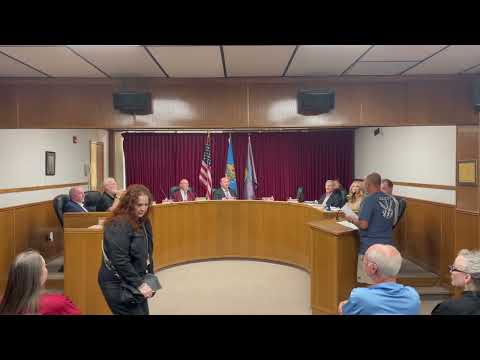
The McAlester City Council on Sept. 23 approved rezoning 38 acres near Randazzo Road from A-1 agricultural to R-1B single-family residential to allow the Wallace Meadows development, and accepted a preliminary plat for phased development after extended public comment. The vote clears the zoning change; councilors instructed staff and the developer to pursue a phased approach and additional engineering reviews before final infrastructure acceptance.
The rezoning vote came after more than an hour of public comment from nearby property owners who said the proposed density — described by staff and the developer as about 5.34 dwelling units per acre, totaling roughly 203 buildable lots on 38 acres — would drastically change the area’s rural character and raise safety and infrastructure worries. Daniel (Danelle) Taylor, a successor trustee whose property borders the site, told the council that the development “would not have access to Rural Water No. 5” and raised concerns that using a nearby water tower could leave surrounding customers below required pressure levels.
Council staff and project proponents said the city’s contract engineer and utilities staff are reviewing water and pressure models and are pursuing required state and federal permits. City planner Jamie Clinton advised the council that utility design, stormwater management and compliance with state DEQ stormwater permit requirements will be required before construction can begin. The council and staff repeatedly noted that engineering permits (water, sewer, stormwater) and as-built acceptance would be required before the city would take responsibility for roads and utilities.
Several residents pointed to traffic and sight-line risks where proposed subdivision roads would intersect Peaceable Road — a farm-to-market route built with federal funds — asking the developer to consider shifting initial phases to reduce early use of the southern access points. Multiple speakers asked that initial phases be placed along the northern portions of the parcel rather than the southern boundary at the city limits. Council and staff responded that subdivision review and road acceptance will be handled in phased stages and that final plat and construction standards must meet city requirements.
Curtis Woods, who identified himself as working in economic development for the Choctaw Nation, and other supporters said the rezoning will help provide housing for workers and first-time buyers and noted demand for more single-family product in McAlester. Planning staff noted the application followed re-noticing after an initial mail/notice error and that the Planning Commission unanimously recommended approval at its Sept. 16 meeting.
Council deliberations focused on process and timing: several council members and the city attorney advised that plat approval is largely ministerial if the final plat meets subdivision regulations, and that preliminary plat approval is a more appropriate mechanism to allow the developer to proceed with design and phased infrastructure while reserving the city’s right to accept roads and utilities only after as-built inspections. The council voted to approve the rezoning and to accept the developer’s preliminary plat rather than a final plat, which councilors said better protects residents and gives staff leverage over infrastructure sequencing.
Action taken: the council voted to rezone the property and approved the preliminary plat; the final plat, road construction and utility acceptance will be reviewed and approved by the council in phases after required engineering and permitting are complete.
Residents raised continuing questions about stormwater: staff and consultants said state DEQ permits require post-development runoff to match pre-development flows, and the plat shows multiple retention basins; engineers must demonstrate compliance during permit review. Several speakers also said they believed some mailed notices were returned or unreadable; planning staff produced a mailing log they said was signed at the post office and showed notices were mailed to owners within the statutorily required radius.
The council’s action does not authorize any construction work to begin; permits for streets, water and sewer will be required and must be approved before building permits are issued. Councilors said they expect the project to be built in phases driven by market demand and engineering readiness, and they asked the developer to continue working with the city on access, traffic mitigation and water-pressure modeling.
Ending: The developer and staff agreed to return with phased infrastructure plans and engineering confirmations for council review before the city accepts roads and utilities as public infrastructure.