Get Full Government Meeting Transcripts, Videos, & Alerts Forever!
Get email alerts on the Youth Mental Health topic
No spam. Unsubscribe anytime.
Boys & Girls Club reports improvements, seeks sustainable funding for ARPA mental‑health pilot
Summary
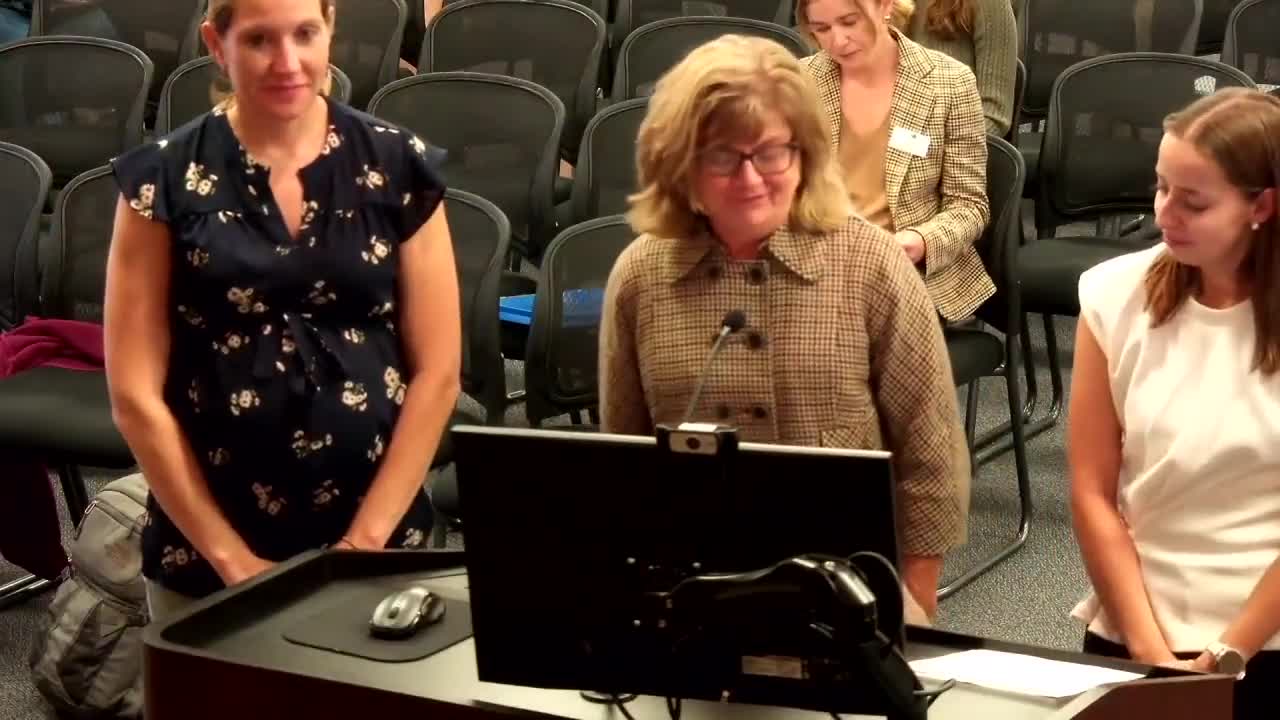
Sandra Quigg, CEO of the Boys & Girls Club of Harrisonburg-Rockingham, told Harrisonburg City Council on Sept. 23 that a city ARPA grant of approximately $125,000 funded a pilot to expand mental‑health supports for after‑school youth.
Sandra Quigg, CEO of the Boys & Girls Club of Harrisonburg-Rockingham, told Harrisonburg City Council on Sept. 23 that a city ARPA grant of approximately $125,000 funded a pilot to expand mental‑health supports for after‑school youth.
The pilot used a three‑pronged approach: direct programming for youth, training for club staff, and family outreach. Quigg said the program hired a mental‑health advocate, contracted a graduate assistant for data collection, partnered with James Madison University’s Madison Center for Community Development and coordinated trainings with Harrisonburg City Schools.
“The grant takes a three‑prong approach: assist the youth, assist the staff, and assist the families,” Quigg said. She told council the clubs serve “6 to 800” youth annually and are uniquely positioned to reach children ages 5–18 with daily contact.
Anna Garst, a graduate student at James Madison University working on implementation and evaluation, described the curricula in use: an evidence‑based compassion‑and‑resilience program (referred to in presentation materials as C Learning) alongside the existing Too Good for Drugs curriculum. Garst said staff used activities such as mindful eating and mindful walking and that the project adopted an online data platform to consolidate attendance, surveys and observations.
Garst said evaluation results showed measurable improvements. For K–2 students, staff‑reported measures on the Too Good for Drugs instrument indicated gains in personal and prosocial behaviors between the start of the 2024 academic year and spring 2025. For grades 3–12, a self‑report measure showed declines in overall scores and in hyperactivity, and a decline in emotional problems.
Garst and Quigg also highlighted a persistent challenge: peer‑problems. “Almost half of the youth at the clubs fell in the abnormal range for peer problems,” Garst said, and another sizable share were in the borderline range.
Presenters flagged implementation barriers. Staff surveys after trainings showed improved understanding of topics but cited limited time, fewer hours for part‑time staff, frequent turnover and difficulty getting all staff into training sessions. Quigg said turnover in the mental‑health advocate position undercut continuity; the organization concluded the pay level had not reliably attracted experienced, longer‑term candidates.
To address turnover and create a stable coordination role, Quigg said the club will repurpose a graduate assistant into a family wellness navigator to coordinate the grant, gather data and work directly with youth. Dr. Caitlin Owens, a licensed clinical psychologist and assistant director at JMU’s Madison Center for Community Development, said she is assembling JMU clinical trainees to provide on‑site therapeutic services once university approvals are in place.
Quigg said the pilot leveraged local partnerships, including the Harrisonburg‑Rockingham Community Services Board’s behavioral health wellness program, and that the club has applied for additional funding: “We have proposed at least seven other grants; we’ve won two,” she said. Council members noted ARPA is a limited‑term funding source that must be spent by 2026; Quigg said the pilot was explicitly intended to be leveraged to secure longer‑term support.
Council members praised the program’s outcomes and model of partnering with university and community behavioral health resources. Mayor Mary Reid said the clubs showed their role beyond childcare during COVID and called the pilot “proof” of out‑of‑school programs’ broader contributions.
Quigg said next steps include formalizing the family wellness navigator role, beginning on‑site therapeutic services through JMU placements pending university approvals, strengthening referral pathways with Harrisonburg City Schools, and continuing grant seeking to sustain services beyond the ARPA timeline.
Questions and public comments at the meeting reinforced interest in expanding on‑site supports, tying referrals to school observations and improving family engagement.
Ending: The club team asked the council to consider continued support and noted the pilot’s data‑driven approach as a tool to secure additional funding and refine future programming.