Get Full Government Meeting Transcripts, Videos, & Alerts Forever!
Get email alerts on the City Budget Millage topic
No spam. Unsubscribe anytime.
Jacksonville council approves smaller millage cuts after marathon budget debate
Summary
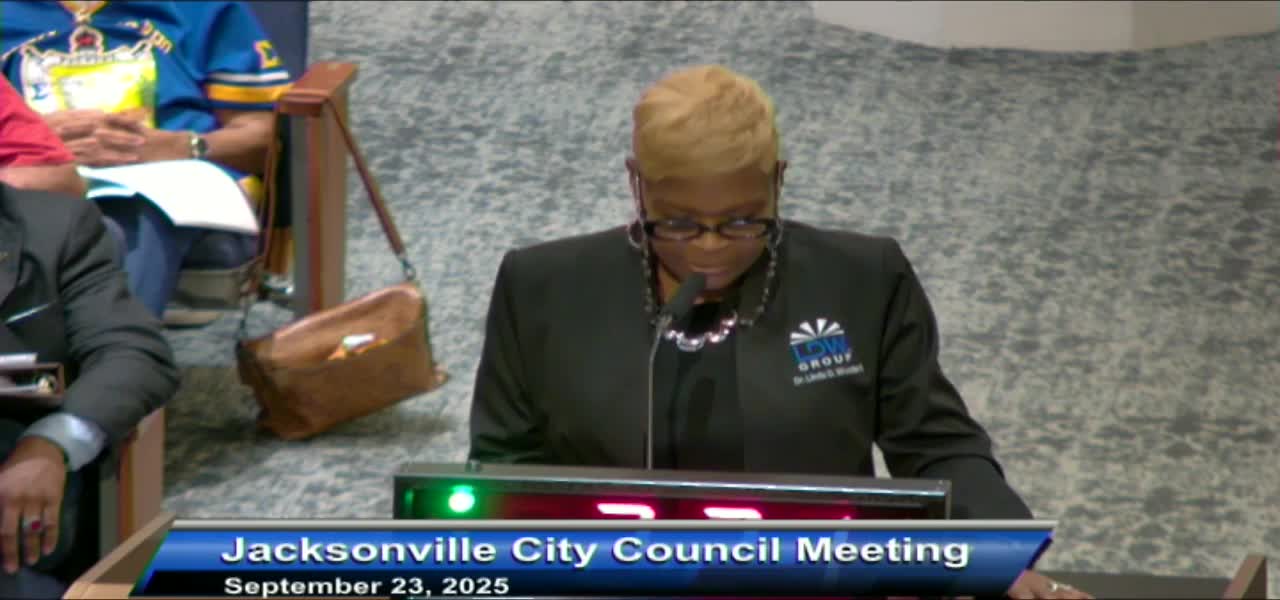
After nearly 10 hours of remarks and public testimony, the Jacksonville City Council approved modest reductions to the city and Beaches millage rates while voting on dozens of budget items and amendments. The meeting exposed a sharp split between members pushing for tax relief and those warning cuts would hit essential services and public safety.
Jacksonville City Council approved modest reductions to the cityand Beaches millage rates after nearly 10 hours of debate and public comment Tuesday night. The final, council-approved rates were 11.1919 mills for the consolidated citygeneral services levy (previously advertised at 11.3169) and 7.9012 mills for the Beaches levy; both changes passed by narrow margins after extended debate.
Council members said the meeting reflected two competing priorities: some members sought small, recurring property tax relief, while others said even modest cuts would force reductions to programs residents rely on. Vice President Scott Howland, a leader of the finance committee, argued the changes were conservative and still funded many programs in the mayor'9s budget. "What we're actually debating here is whether to let 400,000 households in Jacksonville keep money they've earned," Howland said during debate, adding the committee retained funding for many safety-net programs while trimming the advertised increase.
Opponents said the reductions would chip away at a budget that the mayor and departments shaped to meet long-term obligations, including agreed raises and rising health-care and pension costs. Councilman Matt Carlucci, who voted against the cuts, said: "Great cities do not cut their way to greatness. Great cities invest in their people by protecting the most vulnerable and by ensuring public safety is strong and well prepared for the future." Several union and public-safety representatives in the audience urged councilors to keep revenues intact.
Public testimony before the votes was dominated by residents and community groups who traveled to speak for and against the proposal. Speakers against the cut warned it would reduce funding for telehealth, Meals on Wheels, eviction-prevention programs and housing initiatives; speakers in favor described the change as modest tax relief for homeowners in a city they called increasingly unaffordable.
The council voted the city millage cut (a 0.125-mill reduction from the advertised 11.3169) 10-9; the Beaches millage reduction was approved under the same 10-9 margin after language changes to keep the Beaches rate aligned to the consolidated levy. Because of a higher percentage over rollback for one small jurisdiction, the town of Baldwin required a different procedural threshold; council members discussed a separate path for Baldwinincluding a possible follow-up ordinance to align Baldwin's rate with the rest of the city.
The votes on the millage levies set the tax rates the city will use to prepare the final budget. Council members then shifted to dozens of line-item amendments and smaller appropriations in the mayor'9s proposed operating and capital budgets; several amendments were debated at length, and a handful passed, some by narrow margins and some by emergency transfers. Council leaders said remaining budget technical work and any additional amendments will move forward at follow-up meetings and committee sessions.
Why it matters: The approved millage rates set how much property owners will pay per $1,000 of assessed value and determine the revenue the city can allocate to public safety, libraries, neighborhood programs, health services and capital work. City government officials and civic groups said continuing pressuresfrom rising costs, long-term pension obligations and a wave of capital projectsmean small revenue changes can compound into larger service impacts over several years.
Whathappens next: The council will finalize appropriation ordinances and vote on budget bills in follow-up sessions; departments will receive guidance about programs that were restored and those that require further review. Council leaders also signaled intent to continue discussions with public-safety unions, health-care providers and community nonprofits to refine how limited discretionary dollars are used.