Get Full Government Meeting Transcripts, Videos, & Alerts Forever!
Get email alerts on the Human Relations Council topic
No spam. Unsubscribe anytime.
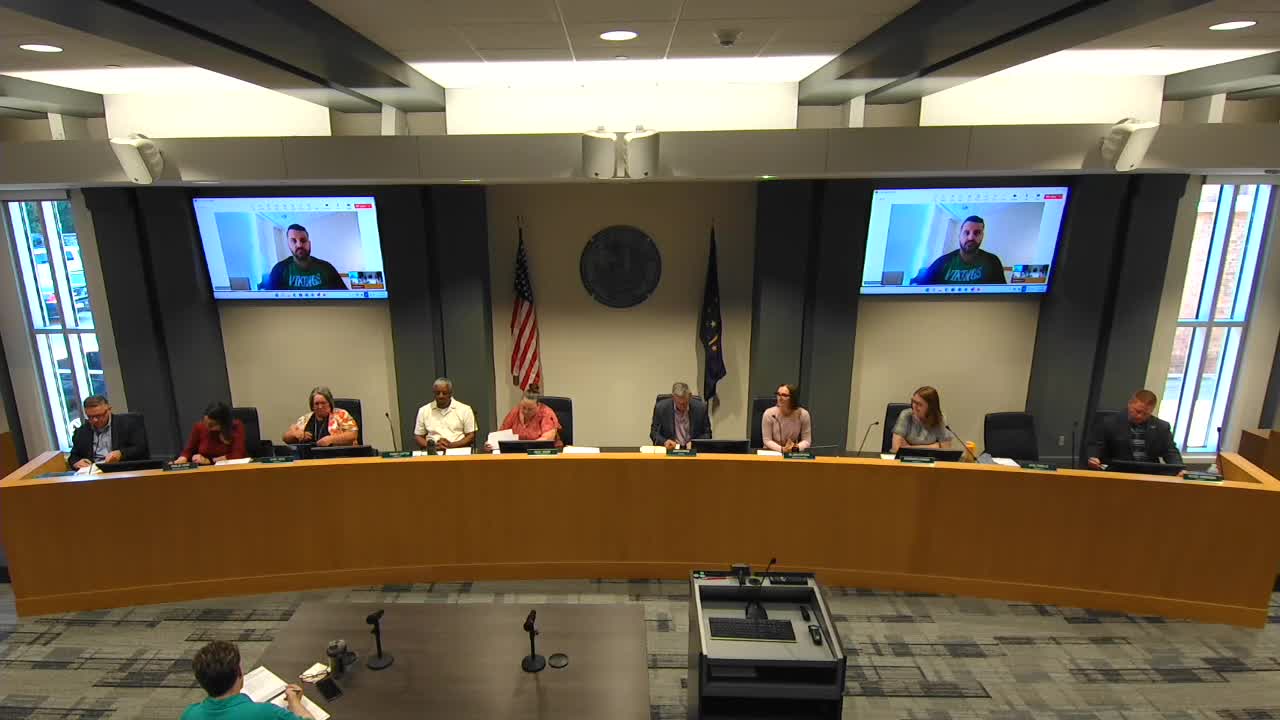
Valparaiso council approves change to Human Relations Council appointments, 5-2
Summary
The Valparaiso Common Council approved Ordinance 8-20-25 to change appointment authority and remove “advisory” from the Human Relations Council name, shifting appointments to a split model between council and mayor; the measure passed 5–2 after extended debate.
The Valparaiso Common Council on July 28 adopted Ordinance 8-20-25, amending Valparaiso Municipal Code sections related to the Human Relations Council to split appointment authority between the council and mayor and to remove the word “advisory” from the council’s name. The ordinance passed on a roll call vote of 5–2.
Supporters said the change is intended to make the Human Relations Council more public-facing and to broaden representation. “The revised ordinance introduces a more balanced structure with appointments made by both the city council and the mayor — six by the council, three by the mayor,” Councilwoman Melissa Hunt said, adding the change “ensures broad representation, diverse perspectives” and “affirms our values through shared governance.”
Council President Capitan said the rewording elevates the council’s visibility. “The removal of ‘advisory’ signals an important shift in visibility,” Capitan told colleagues, saying the HRC should be “recognized as a public-facing body that serves as a bridge between residents and your city government.”
Opponents warned the change blurs the separation between executive and legislative roles. Mayor Costas said he had relied on the existing advisory structure to receive direct input on service delivery, which he described as distinct from the council’s legislative and fiscal roles. “The mayor’s office is in charge of the delivery of all city services,” the mayor said, arguing the current structure has “worked really, really well and been very, very effective.”
Other council members weighing in said the change was intended to prevent duplication of bodies and to preserve a single, collaborative forum. “If one board denies a grant application, will applicants go to another?” Council Member (speaker) expressed during debate in support of a single, collaborative body. Several council members also noted they had met with current HRC representatives before the vote; some attendees had expressed continued disagreement about specific points but agreed on serving the community.
On procedural questions, Hunt and others said the ordinance does not alter the Human Relations Council’s mission or charge; it only changes appointment authority and the council’s formal naming. Hunt said she hoped current members would remain on the council after the change.
Ordinance 8-20-25 passed on a roll call vote: Patton — yes; Domer — yes; Papillo — no; Anderson — no; Capitan — yes; Hunt — yes; Reed — yes. The council recorded the outcome as approved.
The council did not adopt additional budget allocations or programmatic details as part of this ordinance. Several speakers requested that if the change proves problematic the council can revisit the ordinance in a future meeting.