Get Full Government Meeting Transcripts, Videos, & Alerts Forever!
Get email alerts on the Cross Connection Enforcement topic
No spam. Unsubscribe anytime.
Bloomington Utilities tightens backflow enforcement, adds $150 fine and clearer escalation
Summary
The City of Bloomington Utility Service Board approved updates to its cross-connection control enforcement response plan, establishing clearer escalation steps, a $150 fine for overdue tests and a 15-day compliance window before further action including service shutoff.
The City of Bloomington Utility Service Board on Sept. 26 approved revisions to the utility’s cross-connection control enforcement response plan, tightening enforcement steps for overdue backflow-prevention device testing and clarifying when the utility may pursue fines or service shutoffs.
The changes give staff a defined escalation path for common violations and set a $150 flat fine for each overdue device after one written notice, with 15 days allowed for customers to schedule testing before staff may pursue further enforcement. The plan also makes shutoff or legal action an explicit final recourse when other compliance measures fail.
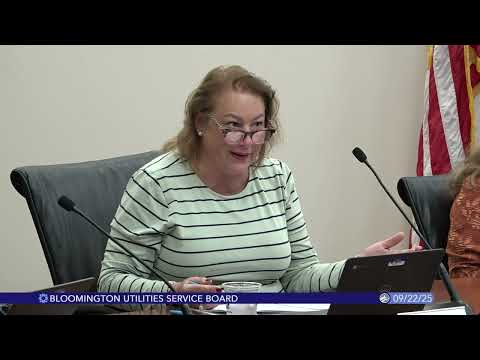
"We are updating this plan, in large part to improve enforcement consistency," said Matt Daberdin, environmental program coordinator in CBU engineering, during a presentation to the board. Daberdin said the utility uses software called TrackMyBackflow to track required annual testing and to send automated reminders to customers.
Daberdin described backflow prevention as a measure to keep contaminated water from flowing back into the public water main during events such as main breaks or large firefighting flows. "There are a lot of potential cross connection hazards out there," he said. He told the board the utility has about 3,000 backflow-prevention devices in its system and that the $150 fine is "roughly the cost of the test."
Under the updated plan, staff will typically send two automated reminders through TrackMyBackflow, then a violation letter with a 15-day compliance period. If a customer does not respond or schedule testing, the utility will impose the $150-per-device fine and continue escalation toward a shutoff hearing or legal action if needed.
Daberdin and board members stressed the utility will pursue compliance before penalties and will allow for flexibility when customers show scheduling difficulties. The plan retains an exception allowing staff to accelerate enforcement in "extraordinary" cases that pose higher risk to public health.
The board and staff noted the revisions align the enforcement response plan with the water ordinance (chapter 24 of title 9) and the state testing requirements overseen by the Indiana Department of Environmental Management. The revised plan replaces a vague range of possible responses with a matrix of typical steps tied to specific violation types.
Board members asked about how the utility identifies irrigation and other systems that require backflow devices; Daberdin said identification comes from billing records (irrigation meters), usage spikes, inspections and contractor records. He said licensed testers typically can perform annual tests within days to a few weeks depending on schedule.
The board approved the update by voice vote.