Get Full Government Meeting Transcripts, Videos, & Alerts Forever!
Get email alerts on the Zoning topic
No spam. Unsubscribe anytime.
Scott County commissioners approve ordinance to allow 1-acre lots with reduced frontage and new setbacks
Summary
Scott County commissioners voted 2-1 Sept. 17 to amend parts of the county zoning ordinance to allow one-acre residential lots in areas zoned A-1 and to reduce minimum road frontage and certain setbacks.
Scott County commissioners voted 2-1 Sept. 17 to amend parts of the county zoning ordinance to allow one-acre residential lots in areas zoned A-1 and to reduce minimum road frontage and certain setbacks.
The ordinance change—recommended by the county planning commission—lowers the minimum lot size from two acres to one acre in applicable residential areas, sets minimum road frontage at 100 feet, and specifies setbacks of 10 feet from property sides, 30 feet from the rear and 55 feet from the road (measured from the centerline), according to staff presentation at the hearing.
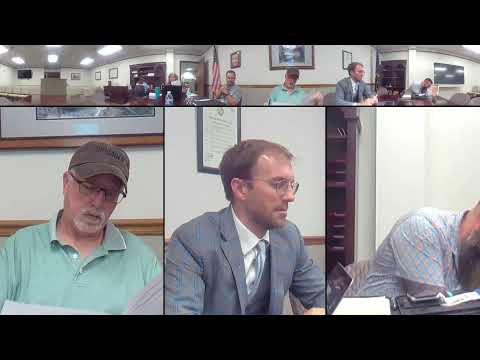
The amendment drew a lengthy public hearing in which residents expressed both support and concern. David Sean Grant, a resident who said he bought a five-acre farm three years ago, told the commissioners, “I’m in favor of it,” saying smaller lots would let family members build nearby. Several farmers and long-time residents spoke against the changes, citing worries about rising land prices, denser development and impacts to rural character.
Tim Bruner, who identified himself as the county health department official responsible for septic permits, told the board that Scott County’s soils and high water table mean smaller lots will likely increase the number of septic permits that are denied. “Almost every property that we do a soil test in in Scott County has a high water table,” Bruner said. He said reducing lot size from two acres to one acre will reduce the number of locations where a new septic system can be installed and that he expects “some people” who buy smaller lots will be unable to develop them because a septic system cannot be permitted.
Carol Flynn, who asked the commissioners to enter an email into the record, said she was concerned about potential conflicts of interest on the advisory board that drafted the change and urged commissioners to weigh long-term infrastructure and drainage impacts. Several speakers raised the same practical concerns — access for maintenance of drainfields, runoff, and proximity of septic fields to neighboring homes.
Planning commission members who spoke to the board said the commission reviewed ordinances in neighboring counties and concluded that one-acre minimums and smaller frontages are already common in the region. Mark Gardner, identified in public remarks as a county surveyor and planning commission member, said the advisory board debated the matter and ultimately issued a favorable recommendation. A planning commission representative confirmed to the board that the commission’s recommendation was favorable.
Commission discussion referenced the statutory process for zoning amendments under Indiana law and the county code. The board chair read portions of Indiana Code regarding factors the legislative body must consider when amending zoning: the comprehensive plan, existing uses and structures, the most desirable uses for land, conservation of property values and responsible growth. One commissioner said a constituent survey he compiled showed roughly 85% opposed while 15% favored the change; another commissioner said the turnout for tonight’s hearing was small relative to the county’s population.
The motion to adopt the amendment passed with two commissioners voting yes and one voting no. The board and staff noted a required follow-up: the planning commission must publish a notice of adoption under the county’s ordinance-adoption rules (section 6-10). The ordinance becomes effective according to the procedure described in that statute after required publication and filing.
What happens next: county staff said the planning commission must prepare and publish the legally required notice summarizing the ordinance, its adoption date and where the full text will be available for public inspection; once that notice is published and filed in the clerk’s office, the ordinance’s effective date will follow the statute’s rules. The planning commission and county staff will handle the publication steps described by county counsel.
Speakers and officials at the hearing advised prospective buyers to consult the health department before purchasing land for development. Bruner said the county will continue to evaluate septic suitability on a case-by-case basis; he warned buyers and real-estate professionals that smaller lots will not guarantee a septic permit.
The board also discussed related planning-office staffing and permit processing delays during the same meeting; commissioners later approved a temporary process for routing permit applications through the county auditor’s office while the area planning director position is advertised.