
Commerce City housing needs assessment finds large shortage of affordable rentals and rising rent burden
Get AI-powered insights, summaries, and transcripts
Sign Up Free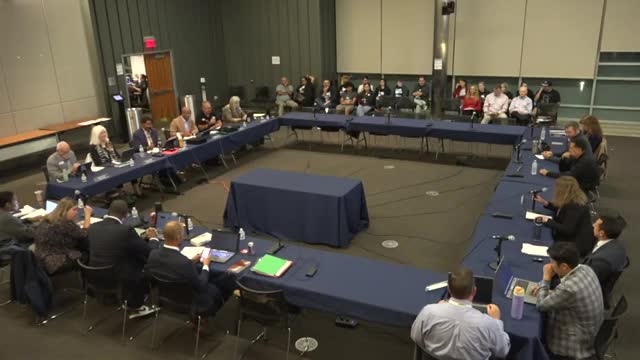
Summary
Consultant presentation to council and planning commission shows Commerce City has a shortage of rental units affordable to households below 80% AMI, rents rising faster than renter incomes, and long‑term needs for an action plan to guide policy.
Commerce City staff and consultants presented a housing needs assessment (HNA) to the Planning Commission and City Council, finding a significant shortfall of affordable rental units and rising rent burdens for lower‑income households.
Matrix Design Group consultant Christian Karren summarized data and public engagement used for the HNA, which staff said meets Department of Local Affairs (DOLA) requirements and will make Commerce City eligible for Proposition 123 funding. The presentation used 2019–2023 American Community Survey (ACS) five‑year estimates and 2023 state demography projections as primary sources.
Key findings presented: - Population and households: The city’s population was presented as just over 67,000 with roughly 21,000 households; consultants projected the population could cross 100,000 around 2040 if recent trends continue. - Housing mix: Approximately 80% of housing units in Commerce City are detached single‑family homes; multifamily represents a much smaller share (about 9% reported in the discussion), producing fewer rental product types. - For‑sale market: Median sale price as of summer presentation remained above $500,000; median days on market rose to about 51 days (from about 10 days in 2022 peak market conditions). Consultants estimated a shortage of roughly 5,000 for‑sale units. - Rental market and affordability: Consultants reported typical advertised rents above $2,800 and median renter household income of about $55,000. The presentation estimated a shortage of roughly 1,500 rental units, primarily needed for households earning below 80% of area median income (AMI). Rents have grown about 18% since 2017 while renter incomes have not kept pace; presenters said rents rose roughly six times faster than renter incomes over the comparison period. - Vulnerable households and quality: Stakeholder engagement and focus groups flagged tenant concerns about habitability (mold, pests) and landlord accountability; residents at public events and a 91‑person convenience survey reported widespread dissatisfaction with affordability and housing quality.
Council members and commissioners pressed for policy detail and next steps. Mayor Pro Tem Noble questioned use of the regional AMI for local policy, saying a high AMI can obscure affordability needs: “If we do housing using the AMI, next thing you know, housing is too expensive for everyone here anyway,” she said. Councilmember Dukes and others asked for the housing action plan that will follow the HNA; staff said the HNA is descriptive and the Housing Action Plan — expected to begin in 2026 — will be the prescriptive phase when policy targets and tools (including potential affordability targets by housing type) will be proposed.
Community engagement: Consultants described open houses, pop‑ups and a virtual focus group conducted over the summer; the resident survey (91 respondents, convenience sample) showed 36% of respondents found it difficult or very difficult to find current housing, and nearly 60% said they were not confident about covering upcoming housing payments. Consultants noted the survey sample is not probabilistic and therefore not statistically representative.
Why it matters: The HNA quantifies a mismatch between the available housing stock and the needs of lower‑income renter households in Commerce City and will feed a housing action plan that staff say will identify policy, funding and zoning tools to address the gaps.
What’s next: Staff will publish a draft report for internal review later in the fall, finalize the HNA by year end, and begin a housing action plan in 2026. Council directed staff that the action plan should present policy options, potential targets for multifamily share and homeownership, and funding strategies including state program eligibility.
Sources: Presentation by Christian Karren (Matrix Design Group) and Heather Bitlock (Planning Manager), public comment and Q&A in the Sept. 25 study session; data sources cited in the presentation included the ACS (2019–2023), DOLA population estimates, HUD AMI figures and state legislation referenced in the presentation.