Get Full Government Meeting Transcripts, Videos, & Alerts Forever!
Get email alerts on the Land Use Data Center topic
No spam. Unsubscribe anytime.
Porter County commissioner says communication failures led board to 'move on' from proposed Union Township data center
Summary
A Porter County commissioner publicly criticized a lack of transparency from QTS and NIPSCO affiliates and said the county "moved on" from the proposed Union Township data center after months of resident concern and slow responses from the developer.
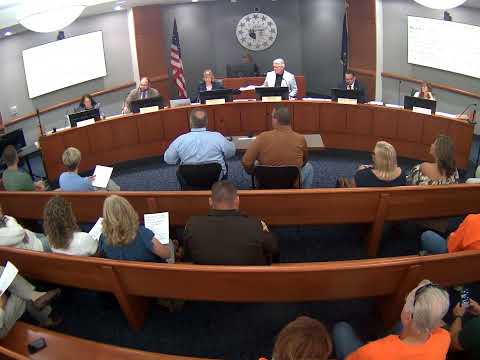
Commissioner Don Gates told the Porter County Board of Commissioners on Aug. 26 that the county will no longer prioritize the proposed data center in Union Township after months of slow communication from the petitioner and newly disclosed corporate affiliations.
Gates, who identified himself during the meeting, said hundreds of residents had raised concerns about the proposal and that county officials had tried to follow "the development process while ensuring and encouraging community participation in accordance with the Indiana Code and our own local ordinances." He criticized the pace and quality of the petitioner's communications and said the revelation that a QTS parent company had a financial interest in an Israeli company had deepened local worries. "To date, the Porter County Board of Commissioners has not received a complete response from NIPSCO or QTS concerning this affiliation," Gates said during the commissioners' announcements.
The statement was followed by multiple public comments during the meeting's public-comment period. Several residents thanked commissioners for their attention to the issue; others urged continued scrutiny. Amy Ketchum, who identified herself as a Union Township resident, told the board, "We are very appreciative" of the commissioners' decision and applauded their handling of the matter. Susan Leggett, also from Union Township, said residents would sleep better after the action. Cheryl Johnson asked whether the petition had been given a deadline; county staff clarified there was not.
Multiple commenters stressed that their objections were not necessarily to data centers themselves but to siting and communication. One speaker told the board that the county was not "anti data center" but that developers needed to demonstrate why a chosen site was appropriate and how residents and local infrastructure would benefit.
Commissioner Gates said he and Commissioner Morales had reviewed the new information and paused to consider implications. "I've moved on," Gates said, adding that the petitioner still retains the right to pursue its application through the planning process but that the board would no longer invest additional political capital in persuading residents of the project's merits.
County planning staff and the planning commission remain the formal routes for any developer to pursue zoning or permit changes. Members of the public asked where to direct follow-up questions; staff advised that planning-department staff (referred to at the meeting as Mr. Jabo) was the contact point for procedural questions about the project's status and next steps.
The statement and public comments came as part of a broader consent-heavy agenda that included multiple routine approvals and contract awards. No formal vote to deny or prohibit the data center was recorded in the meeting minutes; Gates' remarks were presented as a public statement by a commissioner and were not a final board action to block the project.
The issue has been raised repeatedly in recent months at public hearings and comment sessions before the county's planning commission and the Board of Commissioners. Residents and speakers at the Aug. 26 meeting repeatedly requested clearer, earlier communication from petitioners and urged use of the planning process for any future filings.
The county attorney and planning staff were asked to accept public materials and report back if further formal actions were warranted; commissioners said they would consult planning staff and the county attorney on procedural questions and that any formal developer filing would be processed through the planning commission and related ordinance channels.