Get Full Government Meeting Transcripts, Videos, & Alerts Forever!
Get email alerts on the Battery Energy Storage Moratorium topic
No spam. Unsubscribe anytime.
Pulaski County APC recommends 12-month moratorium on commercial battery storage while updating UDO
Summary
The Pulaski County Advisory Planning Commission voted to recommend a 12-month moratorium on permits for commercial battery energy storage systems to allow time for Unified Development Ordinance text amendments and safety reviews.
The Pulaski County Advisory Planning Commission voted to recommend a 12-month moratorium on permits for commercial battery energy storage systems, saying the pause will allow staff and the county attorney to draft and the Board of Commissioners to consider text amendments to the county Unified Development Ordinance.
The moratorium, as presented by the plan administrator, “is for 12 months” and would pause the filing and acceptance of new permit applications for BESS within the commission’s jurisdiction, the plan administrator said. The draft language also allows the moratorium to be terminated early if the recommended UDO text amendments are approved before the 12‑month period ends.
Commissioners and staff said the pause is intended to give the county time to study BESS safety, setbacks, decommissioning, noise and lighting controls, emergency response, and other standards. The plan administrator said the draft ordinance would identify BESS, note that certain BESS installations must follow NFPA 855 and state permitting, and add specific definitions and procedures for battery systems.
Why it matters: Commissioners and residents said the county currently has limited specific rules for battery storage. Without updated text, developers could seek permits under standards that do not address battery‑specific risks and operational requirements. The moratorium is intended to prevent new installations from being permitted under incomplete rules while the UDO is updated.
Key discussion points and proposed regulatory items
- Scope and duration: The draft moratorium presented would be effective for 12 months, commencing as written in the draft ordinance (the ordinance text as read to the commission states a commencement date). The plan administrator said the moratorium could be ended early if text amendments are recommended by the commission and approved by the Board of Commissioners.
- Definitions and standards: The draft adds definitions for BESS and proposes that larger commercial systems follow NFPA 855 and applicable Indiana code and Homeland Security permitting requirements. The plan administrator told the commission that residential or small business battery systems intended to serve on‑site loads would be exempt from the commercial BESS section and treated as accessory uses under the UDO.
- Setbacks and heights: Proposed changes include raising typical setbacks and consistently applying them across components. Staff recommended increasing a previously used 75‑foot construction/clearance distance to 150 feet in several places (surveyor and highway superintendent concerns about equipment access and spoilage were cited). Component height limits for battery cells, racking, containers or dedicated buildings were suggested at 20 feet (some other counties use 15 feet), and commissioners discussed those alternatives.
- Inverters and equipment siting: The draft includes separate setbacks for inverters and substations. Commissioners discussed 500‑foot and 1,000‑foot minimums from non‑participating property lines; one commissioner recommended a 1,000‑foot setback for inverters and major electrical components.
- Fencing, screening and landscaping: The draft maintains perimeter fencing (6–10 feet discussed for height), prohibits barbed or razor wire except where required by national electrical or safety standards, requires gates labeled with 9‑1‑1 addresses, and proposes vegetative screening or other measures at the perimeter. If a nonparticipating landowner waives screening, staff recommended the waiver be recorded at the courthouse within 45 days.
- Decommissioning, monitoring and fees: Staff proposed requiring a signed and executed decommissioning plan at application (to avoid inconsistent timing across sections), a decommissioning fund or financial assurance, and an annual operations report documenting complaints, repairs, emergency calls, and insurance. Staff proposed fee language that would allow application fees plus costs and a 10% surcharge billed to the developer for monitoring and compliance; the template commercial application fee in the draft mirrors the county’s solar fee ($500) with an option to tier by kilowatt/megawatt.
- Emergency response and training: The draft requires a fire safety and emergency response plan, annual training and updates for local emergency responders, and 24‑hour contact information for facility representatives. Commissioners and public commenters urged that training be meaningful and that developers provide or fund equipment for volunteer fire departments when necessary.
- Noise, lighting and other operational controls: The draft references a 50‑decibel guideline consistent with current solar provisions and proposed lighting limits to prevent direct or indirect illumination of nonparticipating parcels (discussion referenced foot‑candles as the metric). Staff proposed weekly or daily maintenance checks with records submitted to the building inspector or a qualified third‑party compliance monitor.
Public involvement and outside resources
During public comment, residents asked whether the county will provide third‑party technical resources to the commission during the moratorium, and the plan administrator said the APC can form committees and that staff has gathered model language from other Indiana counties; staff recommended the commission communicate specific research requests to the Board of Commissioners if financial resources are needed to retain outside consultants.
What the commission decided and next steps
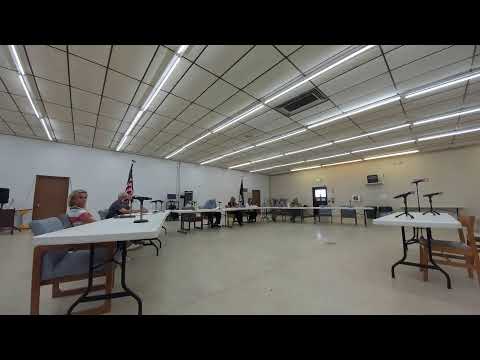
At the meeting the commission moved and seconded a recommendation that the Board of Commissioners impose a 12‑month moratorium on commercial BESS permits to allow time to prepare UDO text amendments. The APC chair said the item will be forwarded to the commissioners for their consideration at the next Board meeting; staff will send the draft to the county attorney for review and circulate meeting dates for follow‑up.
Votes at a glance
- Motion to approve agenda with additions (BESS fee schedule added to new business; data center and battery storage moratorium and industrial‑solar moratorium added to old business): approved by vote of the commission.
- Motion recommending a 12‑month moratorium on issuance of permits for commercial battery energy storage systems within Pulaski County, to allow the APC and staff time to prepare UDO text amendments: approved (APC will present the recommendation to the Board of Commissioners for final action).
Who spoke (selected)
- Plan Administrator (title given in meeting): presented the draft moratorium language, the proposed UDO text changes, and answered technical and process questions.
- Cliff (county attorney): referenced by staff as having reviewed language and will be asked to review final draft.
- Jenny (county surveyor) and Gary (highway superintendent): consulted by staff; their concerns influenced recommended increases to construction/setback clearances.
- Public commenters (unnamed resident commenters and identified citizens): raised concerns about water use, emergency response, EMF/health, and urged careful review; one commenter noted many Indiana counties had enacted temporary moratoria while they update ordinances.
What remains unresolved
The APC recommended the moratorium and discussed detailed UDO language, but the Board of Commissioners must approve any moratorium ordinance and any UDO amendment. Several specific numeric standards discussed (component heights, exact setback distances, fee tiers, and acre limits) were left for further review, calibration with outside standards (NFPA 855, NEC, ASCE), and attorney review.
For now, the APC directed staff to send the draft to the county attorney, collect further input (including from local fire departments), and schedule follow‑up meetings to finalize text amendments for the commissioners’ consideration.