Get Full Government Meeting Transcripts, Videos, & Alerts Forever!
Get email alerts on the Sewer District SRF Debate topic
No spam. Unsubscribe anytime.
Council, commissioners and residents debate costs and risks of sewer district, SRF loans
Summary
County leaders described meetings with state officials about dissolving a county sewer district and explored alternatives, including scaling projects and fixing septic systems. Commissioners and residents raised detailed cost estimates and affordability concerns for homeowners.
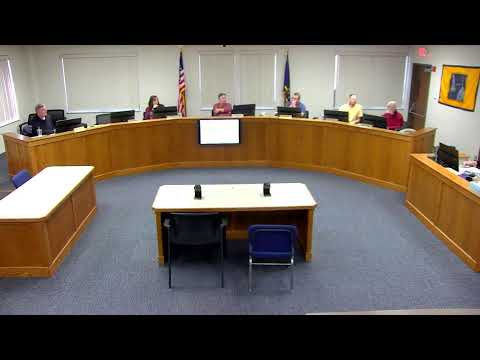
Marshall County officials and residents used the Sept. 8 council meeting to continue a months-long debate about the future of a county sewer district and potential state loans to fund wastewater projects.
The county delegation reported a recent trip to Indianapolis to meet state officials and IDEM (Indiana Department of Environmental Management) staff who administer State Revolving Fund (SRF) loans. Commissioners said IDEM proposed the county consider scaling the project down to reduce costs and offered example loan structures. A central theme at the meeting was cost and affordability: several commissioners and members of the public gave detailed cost estimates that suggest sewer hook-ups and monthly rates could be substantially higher than some residents realize.
Why it matters: Dissolving a sewer district or moving ahead with a major sewer construction project will have long-running budget and tax implications for county residents. Speakers said that if a district is dissolved, the county could be asked to assume existing debt; opponents warned that per-home costs could be in the tens or hundreds of thousands of dollars when bonds, hook-up fees and monthly rates are aggregated over decades.
Key details and figures cited in public and official remarks - The county delegation met IDEM staff and a state official who indicated a smaller SRF-backed project (example cited: $5 million SRF loan) might be possible but questioned whether a scaled project meaningfully reduces per-household costs for remote connections. - Comparative examples cited by speakers: a recent Port County (La Porte area) sewer project scaled to serve 102 homes was reported to have a construction cost of $10,418,709 — roughly $102,000 per home — and a monthly user charge estimate of $115, which, compounded over 35 years at an assumed inflation rate, was presented by a speaker as equating to roughly $185,000 in total per-household cost over 35 years. - Local impact calculations discussed in the meeting: a hook-up fee estimate of $8,000 per house for 620 homes would add about $4,960,000 in hook-up costs to a district’s estimated project cost; one speaker noted engineers had estimated recent Whitley County hook-up fees of $10,000–$15,000 for similarly situated properties. - Commissioners and residents reiterated that construction bids have come in well above preliminary engineering estimates in other districts — examples included a wastewater plant whose initial bid rose from an estimate of $14.5M to first-bid amounts of $24M and rising cost inflation noted in multiple regional projects. - County debt exposure: Commissioners said the sewer district currently holds about $1.3M in outstanding obligations; if the district were dissolved, the county might be asked to assume that debt, and the council would face a decision on who ultimately pays.
Public comment and residents’ concerns Several residents described personal costs and technical obstacles for connecting to sewer lines: long uphill runs, pump and grinder installations for properties far from roads, and varying contractor estimates (residents and local contractors at the meeting gave typical hook-up ranges from roughly $8,000 up to $20,000 depending on site conditions). One resident noted a case in another county where hook-up fees and monthly charges were higher than initially presented.
Commissioner and council discussion Commissioners said they had presented the county’s resolution asking for dissolution and related materials to the governor and IDEM. IDEM staff reportedly took extensive notes and encouraged the county to explore fewer, smaller projects so funding packages could be workable, but several commissioners said they remained skeptical that scaled projects will substantially reduce costs for remote households. Several council members and commissioners emphasized stewardship of tax dollars and questioned whether SRF-backed sewer projects would be an efficient use of public money compared with targeted septic-system repairs.
What’s next County leaders agreed to continue work: staff and commissioners will follow up with IDEM and local engineers to refine cost estimates and funding scenarios. Council members asked staff to compile detailed projections on what dissolving the district would cost the county and what grant or loan options — and their realistic net effect on household costs — would look like.
Ending: The discussion made clear that the sewer debate is unresolved and likely to be a multi-meeting issue: the county will need updated engineering cost estimates, a clearer sense of potential grant funding, and legal analysis of the financial consequences of dissolution before making final decisions.