Get Full Government Meeting Transcripts, Videos, & Alerts Forever!
Get email alerts on the School Health Services topic
No spam. Unsubscribe anytime.
District nurse reports 18,064 health-office visits; outlines screenings, medication and billing
Summary
District nurse Melissa Bridal told the Alexandria Public School District board that school health offices logged 18,064 visits last year and outlined staffing, screening, medication administration and third‑party billing for services provided to students on individualized education plans.
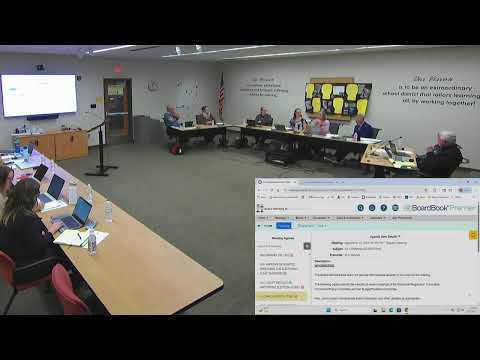
Melissa Bridal, the district nurse for the Alexandria Public School District, told the school board on Sept. 22 that school health offices logged 18,064 visits last school year and that staff provided about 9,000 doses of medication districtwide.
The report said the nurse team includes four nurses supported by licensed practical nurses and unlicensed assistive personnel who perform first aid, daily-medication administration and procedures such as diabetes care. "Our really goal is to keep these kids in school, keep them learning," Bridal said, explaining why the district provides in-school health services and individualized health care plans for students with complex needs.
Bridal said staff provided about 1,700 procedure visits (for tasks such as diabetes care or catheter care) and that roughly 35 students take a daily medication on average across the district. Vision and hearing screening covered about 1,450 students, which generated approximately 83 referrals for follow-up. School staff coordinate those referrals and partnerships with volunteers and local organizations to complete screenings more quickly.
Bridal listed community partnerships that assist screening and follow up: nursing students from ATCC, Sertoma Club volunteers for hearing screenings and Lions Club volunteers for vision screenings. She also described an internal "heart fund" used to pay for urgent student medical needs such as glasses, hearing‑aid repairs or inhalers and said the district manages automated external defibrillators (AEDs) and related supplies.
On third‑party billing, Michelle Beth Kelly, a district staff member, said the district is working to bill medical-assistance (Medicaid) funds for services provided to students on Individualized Education Programs (IEPs). "It's individuals that receive services that are on an individual education plan," Kelly said, describing the district's effort to recover allowable Medicaid dollars to support nursing, speech, occupational and physical therapy, some mental-health services provided by licensed social workers, and certain paraprofessional time when that time is specified and delegated under a student's plan.
Bridal described operational goals the health team is pursuing: improving completion rates of referrals, moving the health information manual to an online format for staff, maintaining standing medical protocols (including naloxone and stock epinephrine) signed by the district medical advisor, and expanding third‑party billing processes. She said the district had new standing protocols signed that will be in effect for the next two school years.
The presentation concluded with board members asking about scope of practice and delegation; Bridal said unlicensed assistive personnel may perform delegated tasks after training but the licensed nurse must delegate and oversee those duties. Kelly and Bridal both emphasized the purpose of billing and medical assistance is to enable students to remain in school while receiving required services.
Board members did not take formal action on the report; the item was presented for information.