Get Full Government Meeting Transcripts, Videos, & Alerts Forever!
Get email alerts on the Budget Forecast topic
No spam. Unsubscribe anytime.
Fairfield Union projects tighter revenues, approves October 2025 five-year forecast
Summary
The Fairfield Union Local School District board approved an October 2025 five-year forecast that projects slower revenue growth, a drop in state per-student funding, and continued reliance on prior-year transfers to capital funds.
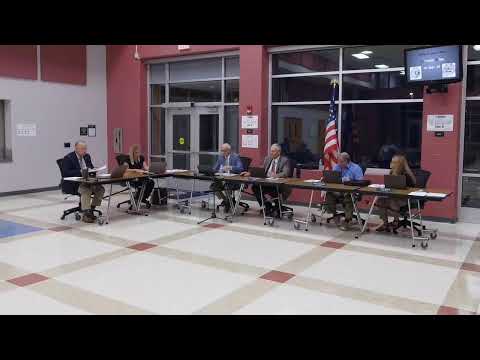
The Fairfield Union Local School District Board of Education approved an October 2025 five-year forecast and accompanying assumptions and notes at its Sept. 22 meeting.
The forecast shows slower overall revenue growth than recent years and a projected decline in the state share of per-student funding. Superintendent William Bellville and Treasurer Mrs. Roberts presented the report and answered board questions before the board voted to approve the forecast unanimously.
Why it matters: the forecast governs district budgeting and appropriations and guides decisions about staffing, programs and capital spending. Board members were told the district’s state funding outlook is changing because of shifts in how state aid is calculated and changes tied to the Community Eligibility Provision, and those shifts reduce the district’s expected unrestricted state aid per student.
Bellville said the district began fiscal 2026 with about $7.6 million in the general fund after a large transfer last year; the district began the prior fiscal year with roughly $17.05 million. He told the board the district made a $14.8 million transfer into capital funds in the previous year. The presentation highlighted three large revenue drivers: property taxes, pipeline ("pup") taxes and the local income tax.
Treasurer Roberts walked the board through the forecast’s line items and the new state reporting requirements. She said the state now requires districts to submit appropriations along with the numerical forecast and notes, which changed the board’s timing for submission compared with past years.
Key numbers and assumptions presented by district staff: - General fund beginning balance for fiscal 26: approximately $7,600,000. - Prior-year beginning balance referenced: about $17.05 million. - Prior-year transfer into capital funds: $14,800,000. - Forecast enrollment base used: 1,900 students (district EMIS currently reporting about 1,912 students). District staff said daily enrollment may shift as attendance and transfers are finalized for the year. - State unrestricted per-pupil share: staff projected a roughly 19% reduction over the forecast period, from about $3,800 per pupil historically toward roughly $3,100 per pupil, a decline of roughly $700 per student in the district’s projection. - Community Eligibility Provision (CEP): staff said the district’s participation drove about $4.3 million into the district over a four-year period beginning in fiscal 25, and that the district’s calculated share of students flagged as economically disadvantaged is declining under the state’s weighted approach (99% last year under CEP, 82% this year, and projected about 76% next year). The state average cited by staff was about 55%.
Bellville and Roberts told the board they expect smaller year-to-year increases in property-tax revenue than in recent years and noted a one-time delinquent pipeline payment last year that inflated that line; pipeline receipts are expected to normalize back to historical levels. The district also expects investment income to remain relatively flat given market conditions.
Board members asked questions about enrollment assumptions and the timing of the forecast submission. Roberts said the district will update the forecast in February and then move to an August/February cadence going forward to align with the state’s new deadlines.
The board approved the forecast, assumptions and notes by roll call vote; the approval was unanimous.
The forecast and appropriations will inform the district’s budgeting and any required follow-up reporting to the state; staff said amendments could follow as final enrollment and invoice data are received.