Get Full Government Meeting Transcripts, Videos, & Alerts Forever!
Get email alerts on the Infrastructure Roads topic
No spam. Unsubscribe anytime.
Clawson candidates split on how to spend $65 million bond; concrete vs. asphalt debate resurfaces
Summary
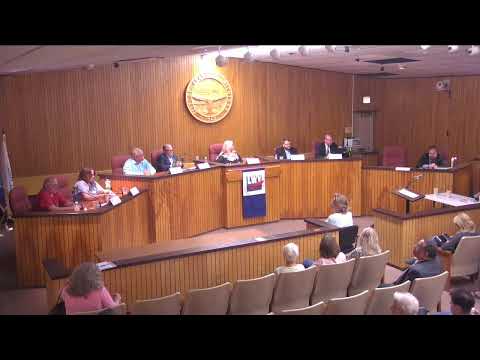
Candidates at a Sept. 17 forum urged careful oversight of a voter-approved roughly $65 million infrastructure bond, argued over whether concrete or asphalt should be used on low-traffic residential streets and discussed grants and development as additional funding paths.
Candidates in Clawson’s Sept. 17 League of Women Voters forum said the city must closely monitor spending of a voter-approved infrastructure bond — frequently cited at about $65,000,000 — and pursue grants and development to stretch local dollars.
The question of pavement type dominated parts of the discussion. George Georges, a candidate who has served on the city’s planning commission, argued that using asphalt on low-volume residential streets could cut costs “as much as 30 to 40%,” freeing up “approximately 15 to $20,000,000” for other work. Georges said the city’s current engineering approach emphasizes concrete and urged the council to re-evaluate materials choices.
Why it matters: The bond is the largest near-term source of capital for streets and related infrastructure in Clawson. Candidates said choices about materials, sequencing and contract oversight will determine how far the money stretches and whether backlog maintenance is addressed.
Several candidates said grants and economic development must be part of the strategy. Bruce Anderson, who identified himself as a member of the Clawson City Council, told the forum the city manager has secured federal and state awards, saying the administration has obtained “approximately $1,100,000 in federal grants, and just under a million in state grants.” Candidates called for continued, proactive grant-seeking and better grant-writing capacity.
Glenn Shepherd, a council member and former planning commission chairman, said infrastructure should be prioritized in bidding and contracting: “Make sure that when we’re getting quotes, that we look at the quotes and we understand them and we hire the best people for the job,” he said, adding that lowest price should not be the only factor.
Other candidates tied long-term fiscal strategy to development. Scott Tillman, a former council member and current planning commissioner, said expanding the tax base through planned downtown development is necessary to maintain services without overburdening homeowners.
Candidates also raised maintenance and complementary needs such as sewer, water and localized flooding mitigation when discussing how to deploy bond proceeds. Several urged transparency to help residents track where bond dollars are spent.
Ending: While all candidates named infrastructure as a top priority, their proposed approaches varied: some urged re-evaluating engineering specifications for cost savings, others emphasized careful contracting and grant pursuit, and several argued both tracks must be pursued to maximize the voter-approved bond.