Get Full Government Meeting Transcripts, Videos, & Alerts Forever!
Get email alerts on the Growth Management topic
No spam. Unsubscribe anytime.
Staff outlines broad growth-management text amendments after public survey shows concern about pace of growth
Summary
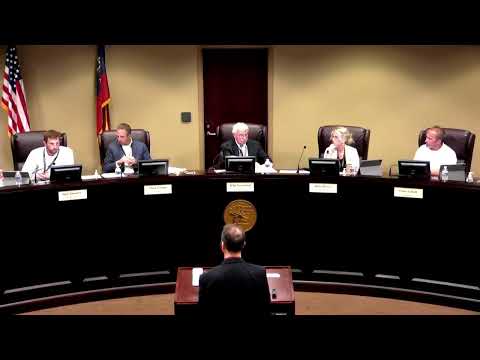
Community development staff on Sept. 4 presented a broad package of proposed text amendments to Dawson County's growth-management ordinance intended to raise lot-size, buffer, open-space, and review standards following a county growth survey and planning commission recommendations.
Community development staff presented a package of proposed text amendments to Dawson County’s Code of Ordinances on Sept. 4 aimed at tightening land-use and development standards following a county growth survey and input from residents and the planning commission.
"As part of this year's review of development matters... staff reviewed the county code for possible changes," Community Development Director Richard Osborne said. He told commissioners the planning commission had unanimously recommended the proposed changes after staff gathered input from citizens, business owners and the long-range planning committee.
Osborne summarized results from a 2025 community growth survey completed by more than 1,350 respondents, of whom staff said 99% identified as Dawson County residents. Key survey findings staff cited: "83% said the county was growing too fast. 68% said that housing, most appropriate for the county was just single family homes. 57% said that for new homes, the size of the property or the lot size was most important to them. 54% said that when residential growth occurs, traffic was their most important concern."
The proposed amendments cover multiple topics: requiring a special-use permit for new event centers in agricultural (RA) districts; restricting short-term rentals to a single-family residence on a property and setting a minimum lot size of one-half acre for new short-term-rental proposals in small-lot lake areas; converting guidelines in the Georgia 400 Overlay District from discretionary "may/should" language to mandatory "shall/must" standards; and increasing required open space and architectural standards for new developments.
Other proposals would remove townhomes from allowed uses in the RT district, prevent new rezonings to the Planned Commercial District (while leaving existing CPCD properties in place), add more uses to the CHI heavy business district, impose a 50-foot buffer around the perimeter of new developments, and limit the frequency and scale of residential rezonings (one residential-development rezoning per planning-commission agenda). Staff recommended returning to gross-density calculations for clarity and adding an option to allow a staff-level 20% reduction in setbacks for some lake lots to reduce repeated variance requests.
Osborne said the amendments would apply to already-zoned properties that have not yet obtained a land-disturbance permit, and staff added an option for a rural-subdivision standard to encourage larger lots. Public input elements would include a required pre-application meeting with staff and a community meeting notifying property owners within 500 feet of a proposed rezoning at a time intended to maximize attendance.
Commissioners commended staff for the process and said they plan to continue refining the proposal. One commissioner said the changes reflect community input and the board’s direction to better manage inevitable growth; another said they would follow up with staff about additional tweaks. The planning commission recommended the changes unanimously. Staff indicated further edits could follow before formal public hearings and final action.