Get Full Government Meeting Transcripts, Videos, & Alerts Forever!
Get email alerts on the Education Finance topic
No spam. Unsubscribe anytime.
Rutherford County schools weigh covering half of 2026 insurance increase amid fund-balance concerns
Summary
School board members discussed covering 50% of a state-driven insurance premium increase for 2026, estimates of the district cost, and whether to use fund balance or cuts to cover it.
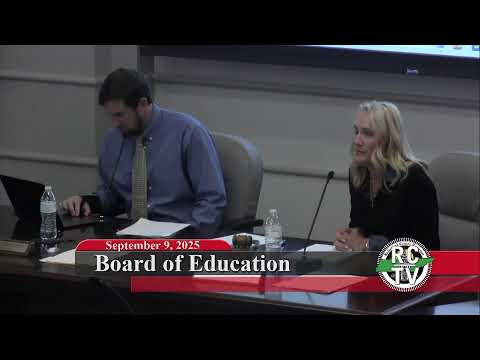
Rutherford County School Board members spent the bulk of a Sept. 9 work session debating how to respond to a roughly 5.5% aggregate insurance premium increase for 2026 the state recently announced and whether the district should cover 50% of that increase for employees.
Board members and staff focused on budget options and risks, including a staff estimate that covering 50% of the increase would cost the district about $2,000,000 and that a smaller 25% contribution would be roughly $1,000,000. Finance staff cautioned that those costs were not budgeted for the current fiscal year and raised concerns about using fund balance for a recurring expense.
The discussion centered on three choices: (1) absorb no increased employer costs, (2) cover 25% of the state-driven increase (estimated at roughly $1,000,000), or (3) cover 50% (estimated at about $2,000,000). Staff described the 50% option as a commitment that would cover the remainder of the calendar-year insurance cycle and noted it would obligate recurring funds going forward because insurance is budgeted on a January–December cycle.
Finance staff warned against using fund balance for recurring expenses, saying auditors discourage that practice and the county finance director recommends maintaining a larger reserve (the county target cited was about 15%). Staff provided additional context that the district’s payroll runs approximately $30,000,000 per month and that the recommended fund balance provides about three months of payroll liquidity. Board members noted the district already expects to draw down fund balance this year for capital or one-time costs, and that additional draws would reduce flexibility going into next year’s budget cycle.
Board members asked for alternatives and follow-up numbers. Several members requested scenarios showing how the district could absorb portions of the increase without dipping into fund balance, including potential cuts, delaying purchases, or using performance-based and growth funding if it arrives on schedule. Staff noted that outcome/growth funding timing is uncertain: growth payments have arrived in different months in past years and, in one recent year, the last payment arrived after the fiscal year closed, which limited its use as a contingency.
No formal motion or vote on a contribution level was recorded in the work-session transcript. Staff said they would return with alternate funding scenarios for the board to consider at an upcoming meeting.
Board members emphasized the desire to support employees but repeatedly returned to process and fiscal constraints: the county finance director may not approve recurring use of fund balance, and the board would need to identify cuts or revenue to cover any recurring employer share.
The board also discussed that while headline percentage increases are often described as 5–5.5%, actual impacts vary by plan and enrollment choices; staff provided examples intended to illustrate that the premium increase does not equal a full offset of employee salary gains.
Board members asked staff to prepare alternative proposals and clarified that final decisions would follow additional budget detail and presentation at the formal meeting where votes would be taken.