Get Full Government Meeting Transcripts, Videos, & Alerts Forever!
Get email alerts on the Social Services Prevention Programs topic
No spam. Unsubscribe anytime.
Albany County officials approve funding addition and contract renewals for family-centered case management and prevention programs
Summary
Albany County authorized adding a state appropriation to the Department of Social Services budget for a family-centered case management program and unanimously approved renewals of multiple prevention-service agreements, officials said. The programs target families and youth at risk of foster care, homelessness or juvenile justice involvement.
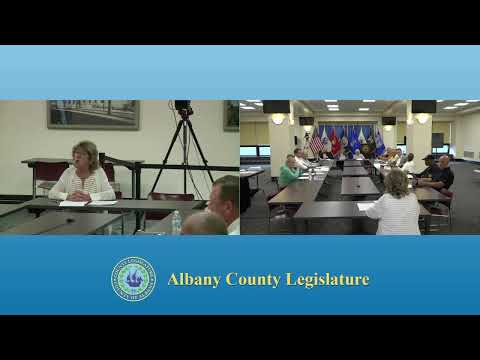
Albany County officials voted to add a state appropriation to the Department of Social Services (DSS) budget to implement a family-centered case management program and approved renewals of several prevention-service contracts with local providers, according to remarks during the meeting.
The county sought authorization to accept appropriations from the New York State Office of Temporary and Disability Assistance for temporary assistance for needy families funding and to amend the DSS 2025–26 budget. "Department of Social Services is asking for the authorization to add appropriation for the '25, '26 budget of 496,153" a DSS representative said during the meeting. The representative described the funding as intended to hire caseworkers and launch the program in the coming weeks.
The DSS presenter said the new program will focus on families with mental illness, substance use disorders, developmental disabilities, people experiencing homelessness and domestic-violence situations. "Our target population will be those with mental illness, substance abuse disorders, developmental disabilities, our homeless population, and DV situations," the DSS staff member said. The presenter added that the team is starting "in the next two weeks." When asked how many families the program would initially focus on, the presenter said the department currently has about 60 homeless families in one shelter and 19 in another — "so about 80 families currently that we would focus our efforts on."
County officials also authorized renewal agreements with multiple community providers that deliver preventive services aimed at keeping children out of foster care or juvenile justice. Those renewals included:
- St. Catherine Center for Children: The county noted St. Catherine's parent-care prevention program serves parents with developmental disabilities or serious emotional disturbance and will provide education, vocational and life-skills support. County staff said St. Catherine's will serve 43 families this year and recently added a family resource center available during daytime hours. The renewal was moved, seconded and approved by voice vote.
- Parsons (referred to in the meeting as Parsons): County staff described Parsons as providing one of the county's stronger clinical prevention services and operating a family resource center with activities and an after-school PATH program. Parsons was described as serving 75 families; referrals come from child-protective workers, mental-health staff, probation and self-referral and are reviewed by a prevention coalition.
- Trinity Alliance in the Capital Region: County staff said Trinity has 95 allotted slots and added an evening reporting youth engagement specialist who will work with identified youth, especially during evenings and weekends. Staff noted transitional services are available for youth up to age 21 when appropriate.
- Home Run (truancy-prevention program): The county described Home Run as working to reduce truancy in Cohoes and the city of Albany by addressing root causes of nonattendance and supporting families. Staff said the county is coordinating with school districts and revisiting a prior truancy-abatement program as an option for districts.
- Cayuga Centers: The county authorized renewal of Cayuga's family-support program, described as an intensive clinical program serving children generally aged 10–17 (and up to age 21 in some cases). Staff said clinical social workers typically visit families two to three times per week for programs that last about six to nine months.
All motions on these agenda items were made, seconded and approved by voice vote during the meeting; speakers making motions and seconds were not identified by name on the record. Questions during discussion focused on program capacity, referral sources, and whether services extend to older youth and transitional supports.
The county presenter said monthly program statistics are provided for prevention programs and offered to supply the board with success metrics on outcomes such as avoiding foster placements or juvenile-justice involvement. Officials asked for and were offered follow-up data about program success and slot utilization.
Funding and operational details that were discussed but not fully quantified in the meeting include the precise budget notation and the breakdown of funding sources for each contract slot; the DSS presenter offered to provide additional data to the board. The board did not identify individual vote tallies in the public record; outcomes were recorded on the agenda as approved.