Get Full Government Meeting Transcripts, Videos, & Alerts Forever!
Get email alerts on the Energy Policy topic
No spam. Unsubscribe anytime.
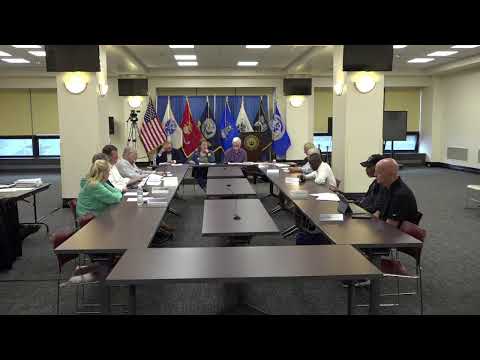
Albany County delays public hearing; unnamed member proposes adding nuclear-supply language to energy notice
Summary
An Albany County meeting on an unspecified date voted to amend the public hearing notice and to move a county energy-policy item out of committee for a public hearing after a member proposed adding language to include components of the nuclear industry in the county’s energy policy notice.
An Albany County meeting on an unspecified date voted to amend the public hearing notice and to move a county energy-policy item out of committee for a public hearing after a member proposed adding language to include components of the nuclear industry in the county’s energy policy notice.
The change to the public hearing notice and the broader policy proposal were raised by an unidentified meeting participant (hereafter "Speaker 2"), who described the amendment as part of an "all-of-the-above" approach to energy and urged the county to be open to "components of the nuclear industry" without endorsing construction of a nuclear plant in Albany County. "I am not suggesting that there should be a nuclear facility in Albany County," Speaker 2 said. "What it says is if there are components of the nuclear industry that are going to help add to the . . . emissionless generation of electricity, we should be open to supporting that."
Why it matters: Speaker 2 framed the proposal as a response to what they described as a state and regional generation shortfall. They cited Governor Hochul, NYSERDA, and the Public Service Commission as evidence that New York is considering a range of low-emission generation options, and mentioned Indian Point, chip-fabrication plants considering modular nuclear power, and local manufacturing capacity (including GE) as factors that could make participation in nuclear-related supply chains relevant for Albany County.
Discussion and motions: The meeting record begins with routine attendance and a short vote to approve prior minutes. Later, Speaker 2 asked to change the date of the public hearing; they said the notice should be moved "out till November," and specifically asked that changes be made so the public has time to submit comments before the legal-notice deadline. A motion was made and seconded to amend the public hearing notice; the chair called for a voice vote and members responded "Aye." Speaker 2 then reiterated the intention to allow more time for public input.
After that vote, a separate motion was made and seconded to move the item out of committee and schedule a public hearing. The motion text, as read aloud in the meeting record, states: "To have the, to move this out of committee to have a public hearing on November 25." That motion was seconded, put to a voice vote, and recorded as carried by voice vote. The transcript contains two different specific dates referenced for the hearing (November 27 and November 25) in successive exchanges; the minutes and legal notice deadline were discussed but the final, formal published hearing date is not unambiguously recorded in the transcript.
Speaker 2 provided the policy rationale at length, describing an "all-of-the-above" energy stance and arguing the county should be open to economic opportunities tied to nuclear-related manufacturing, engineering and supply-chain firms even if no nuclear plant would be built in the county. They said the county's proximity to waterways and existing transportation channels could make it a natural location for some supply-chain activities. "We have even gone so far in the state of New York where they are looking at restarting one of the Indian Point nuclear reactors," Speaker 2 said, adding that chip-fabrication plants and modular nuclear proposals are part of the broader energy conversation.
No formal amendments to the policy language beyond the proposal to include "components of the nuclear industry" were recorded in the transcript, and no formal vote on the contents of the energy-policy text took place at this meeting; the actions recorded were limited to (1) approving prior minutes, (2) amending the public hearing notice, and (3) moving the item out of committee for public hearing. The meeting record includes an explicit invitation from the proposal’s author for members of the public and colleagues to submit constructive suggestions before the legal notice deadline so the notice and online posting (Granicus) could be revised.
What remains open: The transcript does not record a final, unambiguous published hearing date, the precise amended language proposed for the energy policy (beyond the speaker’s descriptive remarks), nor any roll-call vote listing member names for the motions. Those details were not specified in the meeting record provided.
Ending: The committee directed staff to publish the amended notice for a public hearing and to accept public input before the legal-notice deadline; the policy proposal to permit nuclear-industry components in the county’s energy-notice language will return for more extensive public hearing and debate.