Get Full Government Meeting Transcripts, Videos, & Alerts Forever!
Get email alerts on the Zoning Ordinance Revisions topic
No spam. Unsubscribe anytime.
Syracuse committee reviews broad updates to city zoning ordinance; ADU cap, use-table changes discussed
Summary
The Syracuse City Economic Development Committee on an unspecified date reviewed a package of proposed amendments to the Syracuse Zoning Ordinance intended to clarify language, update use definitions and measurement rules, and address recurring implementation issues raised by staff and applicants.
The Syracuse City Economic Development Committee on an unspecified date reviewed a package of proposed amendments to the City of Syracuse zoning ordinance intended to clarify language, update use definitions and measurement rules, and address recurring implementation issues raised by staff and applicants.
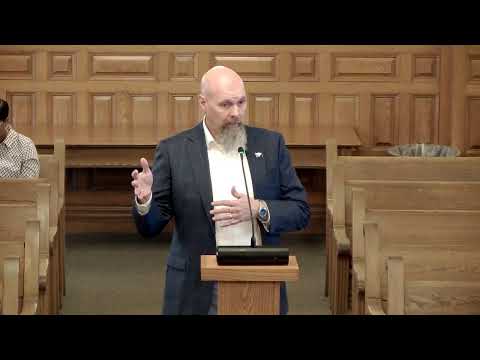
The package would formally rename the document from the city’s “rezone” process to the “Syracuse zoning ordinance”; correct cross-references and Scrivener errors; and remove references to an unfinished administrative manual. Jake Dushaw, deputy commissioner of code enforcement and zoning administration, told the committee the changes grew from “actual use case scenarios” encountered while applying the code.
Why it matters: The updates affect where businesses and housing types can locate, how the city measures building height and setbacks, and how some long-standing special-use approvals are reviewed. Committee members and city staff said the changes are intended to speed permitting, reduce ad hoc variances, and make the rules easier to administer.
Key changes and discussion
- Dimensional standards and townhouses: The proposed revisions adjust minimum lot sizes, roof heights, stories required and maximum lot coverage in several zoning districts. Dushaw cited a Lafayette Hills townhouse project as a use case: the existing 25-foot minimum frontage for certain attached townhouses would be reduced to 20 feet to allow smaller center units and wider price ranges for buyers.
- Planned Institutional Districts (PIDs): The draft clarifies that, except where specifically noted, the rest of the zoning code applies in PID districts (examples given included Syracuse University and St. Joseph’s). Staff said they worked with large institutions on those edits and are in agreement on exceptions.
- Use table and new use types: The proposal revises permitted and special-use categories, adds new use-specific regulations and definitions (for example, separating “neighborhood market” from larger “grocery store”), and adds standards such as a live‑entertainment limit within 300 feet of residential zones. Dushaw said the changes are intended to prevent small corner stores from claiming larger grocery-store classifications to avoid special-use review.
- Cannabis and smoking establishments: Under the draft use table, smoking establishments (including cannabis retail/dispensaries as a form of retail) would be permitted by right in denser downtown or commercial/industrial zones and require special-use permits in some mixed-use categories; they would not be allowed in single-family residential districts. Dushaw said the city verifies state Office of Cannabis Management (OCM) requirements for any dispensary and coordinates municipal comments with police, fire and code enforcement.
- Event space: Staff proposed a new “event space” use to cover flexible pop-up or private-event uses that did not fit the prior indoor/outdoor recreation categories. City staff said many such operations will require special-use permits when near residential areas.
- Light auto repair and junk/vehicle storage: The draft makes light‑duty auto repair uses subject to special-use review and proposes that long-standing special‑use permits be subject to administrative renewal every 30 months. Dushaw said the renewal would trigger periodic reviews to ensure conditions and site plans are being met and would allow the city to bring problematic sites back before the planning commission and the council if automatic renewal is withheld.
- Accessory dwelling units (ADUs): The proposal retains ADUs but sets a maximum of 800 square feet for residential ADUs and ties allowable ADU size proportionately to the principal dwelling’s floor area. Dushaw said, “where we landed on it is no more than 800,” and noted the city has approved one ADU so far in the Sedgwick neighborhood. Council members discussed whether the cap and other requirements (setbacks, parking, rebuild rules after destruction) might hinder uptake and asked staff to evaluate the code’s alignment with broader housing goals.
- Parking and measurement rules: Article 4 updates minimum and maximum off‑street parking tables for newly enumerated use types and clarifies how to calculate parking for conversions or increased intensity (for example, adding bedrooms in a rental). Article 7 substantially rewrites “rules of measurement” to spell out how the city measures setbacks and building height—staff said that is clarification rather than a substantive change to allowed heights.
- Short‑term rentals (Airbnb/VRBO): Committee members and staff discussed the county’s recently passed short-term rental registry and hotel‑occupancy tax enforcement; staff said the county registry helps with tax collection and suggested the city could coordinate or adapt a similar approach. Staff also noted enforcement and identification of listings remains resource‑intensive.
Process, next steps and votes
City staff said the entire package went to the planning commission and returned with a recommendation. No formal council vote to adopt the zoning amendments occurred during the committee meeting. At the end of the session the committee chair asked for a motion to adjourn; a motion was made and the meeting ended.
Selected quotations
Jake Dushaw, deputy commissioner of code enforcement and zoning administration: “So as a zoning administrator, we will go through a summary of the changes.”
Dushaw on ADUs: “Where we landed on it is no more than 800.”
Michael Collins, commissioner for neighborhood business development: “Everything we’re seeing here is through the lens of how do we incentivize good development.”
What to watch next
Committee members said they will review the written draft and may request further committee meetings or amendments on topics raised—particularly ADU sizing, parking impacts in university neighborhoods and mechanisms for limiting concentrations of corner stores or problematic auto repair uses. Staff asked councilors to route specific follow‑up questions to Dushaw and copy planning staff so outstanding technical clarifications can be addressed before any final vote.