
Commission on School Funding adopts rules of engagement, appoints vice chair and creates working‑group agenda
Get AI-powered insights, summaries, and transcripts
Subscribe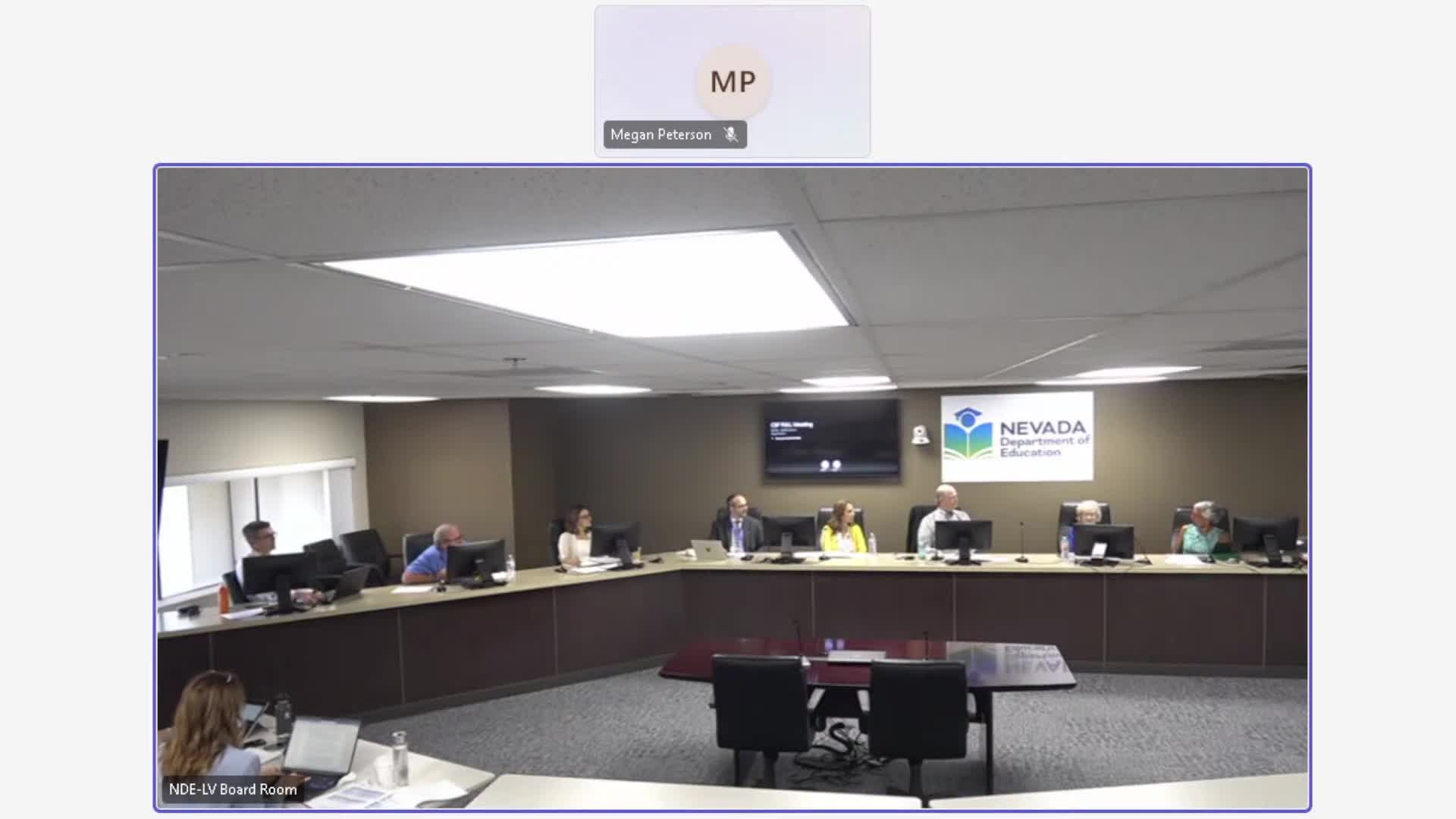
Summary
The commission approved the minutes, re‑adopted its rules of engagement, appointed Joyce Woodhouse as vice chair and outlined 26 policy 'pillars' with tentative working‑group leads to review the pupil‑centered funding plan and related tasks over the next interim.
The Commission on School Funding used its first interim meeting to complete administrative business, formalize operating rules and set a working plan of topics that commissioners will review this year.
Minutes and rules of engagement
Commissioners approved the meeting minutes and voted to re‑adopt the commission's rules of engagement. The adoption was moved, seconded and approved by voice vote; no roll‑call tally was recorded in the minutes.
Vice chair appointment and student observer
Poonam Mathur moved to nominate Joyce Woodhouse as vice chair; the motion was seconded and approved by voice vote. Chair Guy Hobbs also introduced a student observer, Aniruth ("Ani") Poligani, a Clark High School student who asked to shadow commission work and was welcomed to participate in working groups as a nonvoting observer. "We'd love to have you participate," Hobbs said when inviting the student to introduce himself.
Working groups and priorities
The commission presented a matrix of 26 items — ranging from revisiting the at‑risk definition to evaluating stacking of weights, transportation and food‑service allocation methods, special‑education contingency funds, enrollment trend analysis, and the mechanics of counts used for weighted funding. The matrix included tentative leads for each working group and identified some items that can be completed quickly versus others that will require multi‑meeting work and external subject‑matter support.
Chair Hobbs and staff emphasized that working groups are coordinators of analysis and cannot make formal policy recommendations without commission approval. The chair said the commission will use working groups to let small teams research and draft proposals, then return recommendations to the full commission for deliberation and any formal vote.
Why it matters
Commissioners said a working‑group approach lets the body cover technical topics in parallel while ensuring transparency — all results must be returned to the full commission for action. Several commissioners asked staff to mark which items could be resolved quickly so members can close those tasks early and redeploy volunteer time to longer‑term issues.
Ending note
NDE staff will follow up by scheduling the first round of working‑group meetings, circulating the written WestEd addendum and the at‑risk study in advance of the next meeting, and publishing a meeting calendar for the interim.