Get Full Government Meeting Transcripts, Videos, & Alerts Forever!
Get email alerts on the Wildland Fire Response topic
No spam. Unsubscribe anytime.
Napa County official says Pickett Road fire is 100% contained after 6,819 acres burned
Summary
A Napa County official reported the Pickett Road wildland fire that began Aug. 21 burned 6,819 acres and is fully contained. County and mutual‑aid crews used engines, dozers, air tankers and the county’s first night water‑dropping helicopters; work continues with landowners on erosion control and rehabilitation.
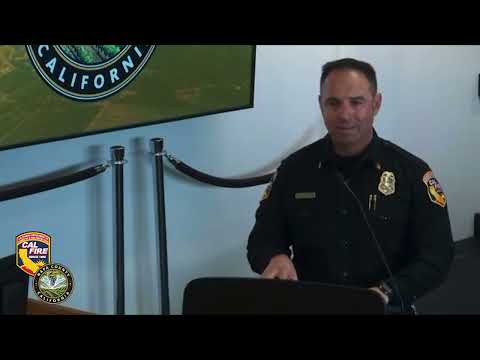
A Napa County official reported that a wildland fire that began Aug. 21 at the end of Pickett Road in eastern Calistoga burned 6,819 acres and is now 100% contained.
The official said the county mobilized a large, multiagency response and used a mix of ground and air assets, including engines, hand crews, dozers, air tankers and, for the first time in Napa County on this incident, night water‑dropping helicopters. “I am thankful today to tell you that it is a 100% contained,” the official said.
The nut of the announcement was that, although the fire burned within terrain and historic fire footprints that include portions of the Glass Fire and 2020 lightning complexes, the county’s preparedness, mutual aid and new tactics limited damage to structures and prevented larger community impacts. Officials emphasized continued work with landowners on post‑fire rehabilitation and erosion control.
County and partner agencies reported specific response resources used in the initial burn period: 46 engines, seven hand crews, 24 dozers, four water tenders, 10 air tankers, five day water‑dropping helicopters and four night water‑dropping helicopters. Crews applied an estimated 76,977 gallons of fire retardant and delivered 152,600 gallons of helicopter‑dropped water, the official said.
Evacuations were coordinated under a unified command that included Cal Fire, the Napa County Fire Department and the sheriff’s office. The county used its OES alerts and warnings system (including Everbridge) to notify residents, and county shelters were opened for evacuees. The county’s emergency operations center was activated at a lower level to support the response.
Local mutual aid played a central role, the official said, with engines and personnel from Calistoga, St. Helena, Napa and neighboring counties including Lake, Sonoma and Solano providing support. Napa County volunteers contributed 11 pieces of apparatus and three additional engine companies to preserve county response capacity for other incidents.
The official credited community preparedness efforts — including 22 active Fire Safe Councils and Napa Firewise outreach — and pre‑fire fuel‑reduction work funded through grants and partnerships. “These lines that were put in this past spring and over the last couple years were utilized on the Pickett incident,” the official said, and the county plans to present maps and further details on that pre‑fire work to the board at a future meeting.
Post‑incident efforts include ongoing heavy‑equipment work with landowners to prepare for erosion control and other rehabilitation over the coming weeks. The official also noted about 6,000 defensible‑space inspections and cited bilingual field briefings and translations provided by Deputy Fire Marshal Eric Hernandez during the response.
The county acknowledged several named partners and leaders involved in the response and support: Cal Fire, the Napa County Fire Department, Sheriff Ortiz and his staff, the Napa Office of Emergency Services, the North Bay Incident Management Team, the Napa Expo (used as an incident staging area), and local leaders including COO Allsup, Supervisor Ramos and Fire Chief Matt Ryan. The official said the cooperative mutual‑aid model and new tactics — notably the use of night water‑dropping helicopters — were important contributors to containment and reduced community impact.