Get AI Briefings, Transcripts & Alerts on Local & National Government Meetings — Forever.
Natrona County Fire District seeks short-term cash after equipment deliveries deplete savings
Summary
Natrona County Fire District officials told commissioners they have spent about $1.1 million of savings to pay for fire apparatus that arrived earlier than expected and asked the county treasurer to advance $200,000 immediately while staff and commissioners develop a longer plan.
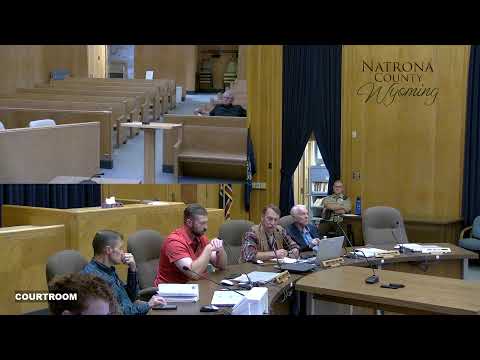
Natrona County Fire District officials told the Natrona County Board of County Commissioners on Tuesday that a cluster of early fire-truck deliveries, a busy wildland season and two retirements left the district drawing more than $1.1 million from its savings and facing a near-term cash shortfall.
The district’s chief, Brian Oliver, said the timing of ad valorem tax distributions changed this year and, together with a heavier-than-expected overtime burden and several apparatus payments coming due at once, forced the district to use savings to cover payroll and other monthly costs. "We spent just over $1,100,000 out of our saving," Oliver said during his presentation.
The district’s board members and officers — including Chris Cody, the district’s fire marshal, Jerry Wyatt, vice chairman of the district board, Dean Jackets, board chairman, and George Tillman, secretary-treasurer — described a “perfect storm”: trucks and brush apparatus ordered years earlier during supply-chain delays arrived simultaneously, increasing the district’s immediate cash needs. Oliver said some vehicles ordered with long lead times arrived earlier than expected because other departments canceled orders, putting Natrona County ahead in the delivery queue.
Treasurer Tom (Treasure’s office) told the commissioners he had two investments called that could be converted to cash quickly. He said Peaks Investment Management could transfer $800,000 from one general-fund investment and $200,000 from the investment pool, and staff could make about $200,000 of the department’s own money available within 48 hours. Heather (Treasurer’s office) explained that moving the $200,000 from the investment pool to checking would allow the district to meet its immediate payroll and retirement obligations.
Several commissioners said they wanted a plan that addressed both the immediate cash needs and the district’s ongoing revenue timing under the new ad valorem schedule. Commissioner comments urged the district to use its own available funds first and then seek county assistance if needed while the treasurer, clerk and district officials develop a multi-month cash forecast. Oliver said he expects monthly expenses (without overtime) of roughly $240,000 and estimated the district needs about $181,000 to get through September; October could require larger amounts depending on payroll and overtime.
The commissioners did not commit to a permanent loan but agreed to allow the treasurer to move the called investment money so the district would have access to $200,000 within about 48 hours. Commissioners also directed county staff and the district to meet with the treasurer and clerk to build a six-month revenue and expense forecast and return with recommendations at the board’s next meeting.
The district officers repeatedly emphasized that the purchases were made with the expectation of reimbursement tied to impact-assistance and development-related funds (referred to in the meeting as anticline and Dyno Solar funds). Oliver said the district had expected those reimbursements to come later and that the timing mismatch — plus supply-chain shifts — produced the current gap. He said he had secured a loan for two additional trucks that will require biannual payments.
Commissioners asked district officials to make the forecast available to county finance staff and to work with their lender to reschedule payments where possible. Treasurer Tom committed to coordinate the investment transfers and to follow up with the district’s bookkeeper about checks already issued and signatures needed.
The county did not adopt a formal ordinance or loan at the meeting; instead, commissioners approved short-term measures by consensus and scheduled follow-up work with the treasurer and clerk. The board said it would revisit any further requests after reviewing projections and the treasurer’s plan.