Get Full Government Meeting Transcripts, Videos, & Alerts Forever!
Get email alerts on the Budget And Taxes topic
No spam. Unsubscribe anytime.
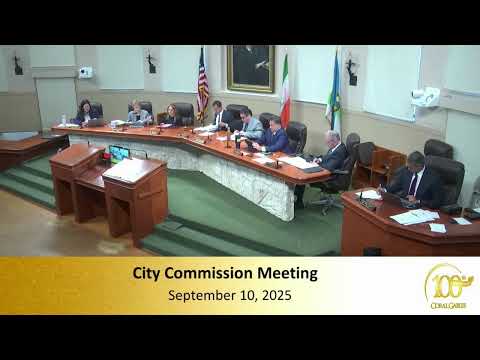
Coral Gables debate over modest millage cut exposes deep budget tensions
Summary
Commissioner Castro proposed a phased 0.25‑point millage cut plan over four years; allies and opponents disagreed over fiscal prudence, staffing costs and whether tax relief should target homestead exemptions or an across‑the‑board millage reduction.
Commissioner Melissa Castro proposed a four‑year plan to reduce Coral Gables’ millage rate by 0.25 points each year, a modest phased cut aimed at returning recurring relief to property owners while keeping core city services intact.
Castro said the plan would draw small, sustainable reductions from recurring revenue and carefully trimmed non-essential requests; she told the commission she wanted a measurable, repeatable path to lower property taxes. Her memo outlined a first‑year reduction that the draft budget office calculations showed would reduce the city’s tax take by roughly $343,000 and would rely largely on smaller renewals-and-replacements budget trims and a single vacancy reduction.
The proposal prompted heated debate. Supporters said even a small, guaranteed reduction delivers predictability and a concrete benefit to homeowners and that a multi‑year plan demonstrates fiscal restraint. Opponents warned that recent hiring and a 4% cost-of-living allowance for staff have committed the city to higher recurring costs and that property-value trends had turned downward in 2025, weakening the city’s revenue outlook. Several commissioners argued that targeted measures such as increased homestead exemptions or public-safety funding protections would better help lower‑income homeowners than a uniform millage cut that favors higher‑value property owners most.
The commission did not adopt a millage change at the meeting. Commissioners agreed to continue the budget conversation at the scheduled public budget hearing and asked staff to supply detailed, line‑by‑line scenarios for how the phased cut would affect department services, capital commitments and the multi‑year financial forecast.
City staff reiterated budget constraints and said any millage decision that reduces recurring revenue would require trade-offs; staff agreed to provide multiple model budgets for the public budget hearing later in the week.