Get Full Government Meeting Transcripts, Videos, & Alerts Forever!
Get email alerts on the Rezoning topic
No spam. Unsubscribe anytime.
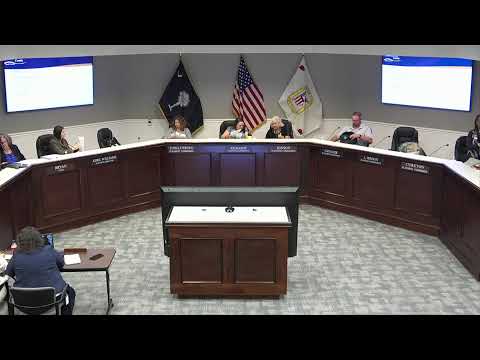
Planning Commission recommends Whitehall Phase 2 rezoning and comp‑plan change despite neighborhood opposition
Summary
The commission recommended changing the Whitehall Phase 2 site from rural to neighborhood on the comprehensive plan and approved rezoning to MDR; both votes were 4-1. Residents urged lower density and expressed concerns about sewer, traffic and preserving rural character.
The Lancaster County Planning Commission voted in two separate motions on Sept. 16 to recommend a comprehensive-plan change and to approve a rezoning for Whitehall Phase 2, each by 4-1.
Staff recommended changing the site’s future land‑use designation from rural to neighborhood rather than the applicant’s requested "growth area," a shift staff said would allow residential density while restricting heavier commercial and industrial uses. "The neighborhood designation is applied to both existing and in-progress residential development... the intent of this category is to preserve the character and direct incompatibility of uses away from formal residential neighborhoods," staff said.
Andy Bright, the project engineer, said the developer agreed with staff's recommended neighborhood designation and told the commission the developer plans 98 units and will submit a traffic impact analysis and a sewer main extension proposal. "We agree with staff's recommendation to go to neighborhood," Bright said. He told commissioners the team plans a left-turn lane on the frontage and is coordinating a roughly one-mile sewer extension with public works.
Residents urged the commission to deny the changes. Peggy Matt, who lives at 1268 Bailey Road, told the commission she and neighbors oppose higher density and said: "I just ask you to not change the zoning on the 60 acres." Other commenters cited traffic, sewer service and preserving rural character.
Commissioners debated procedure because the comp‑plan amendment and rezoning are related; staff advised that county council will consider the comprehensive-plan change first and then the rezoning. The commission first recommended the comp‑plan change to neighborhood (4-1), then approved rezoning to MDR with conditions (4-1). Both recommendations now go to county council for final decisions.
Staff noted that approvals at the commission level are advisory and council may reach a different conclusion. The applicant said the development will be lower density than the zoning maximum and that required technical studies will be updated prior to council review.